Navigating urban spaces can be challenging, especially for those with visual impairments. Thankfully, the integration of TufTile ADA (Americans with Disabilities Act) detectable warning tiles (DWTs) in streetscapes offers a solution, ensuring inclusivity for all.
But why are they important?
How Detectable Warning Tiles Support Accessible Streetscapes
Enhanced Safety
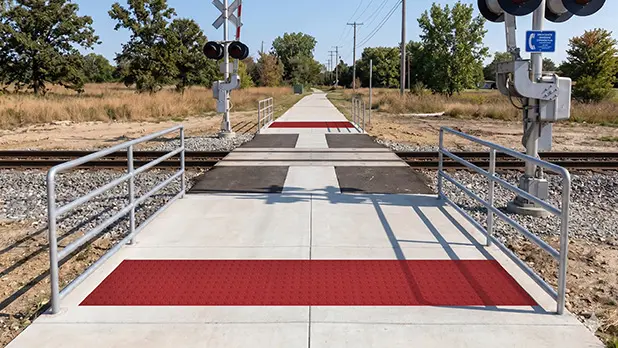
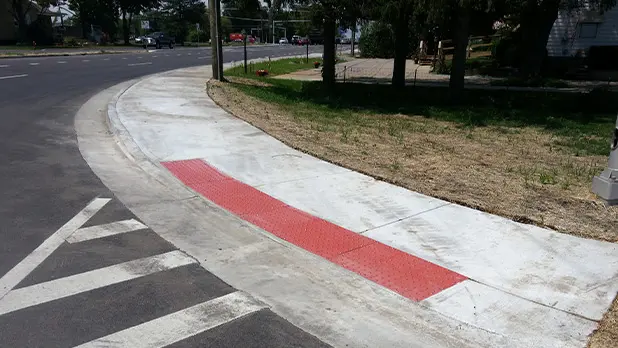
These tactile tiles can function much like a ‘stop sign’ for feet. Their distinctive truncated dome texture provides a recognizable tactile warning that alerts pedestrians who are blind or have low vision to certain hazards and transitions, such as applicable street crossings or hazardous drop-offs.
Consistent Tactile Information
For pedestrians using long canes or detecting the surface underfoot, DWTs provide a standardized tactile warning that can be recognized as they navigate the pedestrian environment. Using truncated domes consistently for this purpose helps distinguish a warning from other types of tactile information.
Compliance
Beyond their functional benefits, detectable warning surfaces are required in certain applications under applicable accessibility standards. Streetscape projects should be designed according to the ADA, PROWAG, and other accessibility requirements that govern the specific project and location.
Inclusivity
A thoughtful streetscape design considers all its users. Incorporating accessibility features such as DWTs can help create pedestrian environments that support greater confidence and independence for people with disabilities.
Aesthetic Variety
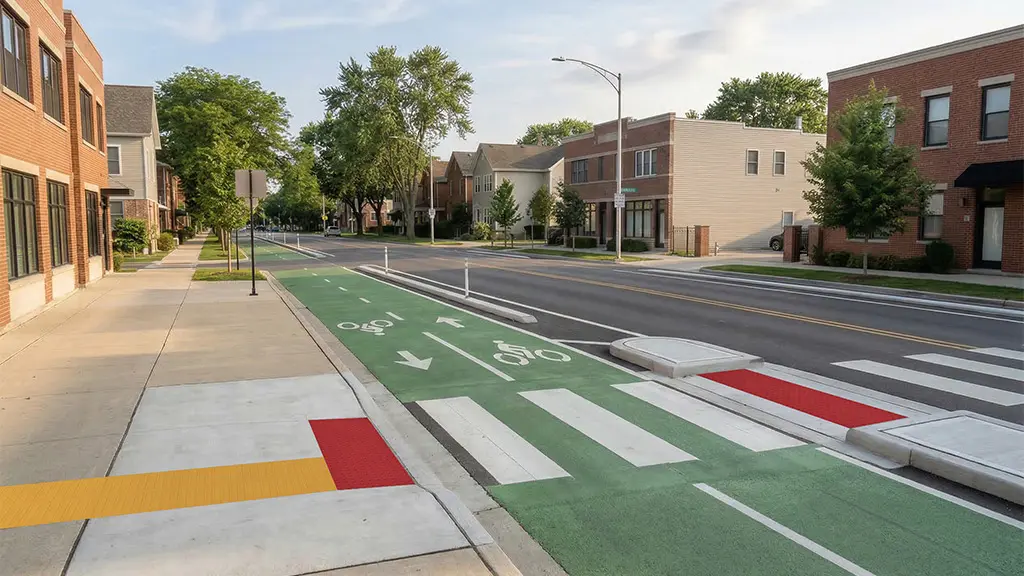
TufTile’s ADA detectable warning tiles are available in various colors and materials, providing options that can complement different streetscape designs while meeting the applicable visual contrast and project requirements.
Creating Streetscapes for All Pedestrians
Detectable warning tiles are one part of a larger accessible streetscape that can also include accessible routes, curb ramps, crossings, signals, signage, and other pedestrian features. Each element has its own role in creating an environment that is easier to understand and navigate.
By recognizing and addressing the needs of people with disabilities, TufTile ADA detectable warning tiles can play an important role in creating more inclusive, safe, and navigable urban environments.