Detectable warning tiles are exposed to conditions that can be demanding on any exterior building product: pedestrian traffic, mobility devices, precipitation, freeze-thaw cycles, deicing materials, cleaning equipment, and routine maintenance. The material specified for the warning surface therefore has implications well beyond its appearance on installation day.
Galvanized steel is one option for projects where strength, corrosion protection, finish flexibility, and long-term serviceability are important considerations. TufTile manufactures its steel detectable warning tiles from G90 galvanized steel and offers configurations for both wet-set and surface-applied installations, giving project teams options for new construction as well as retrofit conditions.
Why Galvanized Steel Is Used for Detectable Warnings
Steel provides a rigid, durable base material for a detectable warning tile. Galvanizing adds a zinc coating that helps protect that steel from corrosion, an important consideration for products installed outdoors and exposed to moisture, seasonal weather, and maintenance operations.
For detectable warning applications, that combination can be particularly useful where project teams want a metallic system but also need flexibility in installation method or finish. Galvanized steel can be fabricated into relatively thin, structurally rigid tiles, powder coated for visual contrast, and configured as either a wet-set or surface-applied system.
It is important to evaluate tactile-surface materials in the context where they will actually be used. Durability, visual contrast, slip resistance, maintenance, aesthetics, and contractor familiarity can all affect long-term performance. Research summarized in the guide also identifies solid steel and cast iron as materials worth considering where frequent snow removal is expected.
What G90 Galvanizing Means
TufTile manufactures its galvanized-steel detectable warning tiles from G90 galvanized steel. “G90” refers to a coating designation for zinc applied to sheet steel; it is a material specification rather than a generic synonym for any galvanized product. The zinc layer helps protect the underlying steel from corrosion. TufTile offers both 10-gauge and 16-gauge versions, giving specifiers options where project priorities differ.
The G90 designation is useful because it gives specifiers a defined material characteristic to evaluate rather than relying on the word galvanized alone. When comparing steel detectable warning products, the base-metal thickness, galvanizing specification, finish, installation system, and replaceability should all be reviewed together. Those details provide a more meaningful basis for comparison than material category alone.
10-Gauge and 16-Gauge Options
Gauge affects sheet thickness and weight. TufTile lists its 10-gauge galvanized steel at approximately 5.5 pounds per square foot and its 16-gauge at approximately 2.5 pounds per square foot. The heavier option provides greater material rigidity, while the lighter option can simplify handling. The appropriate gauge should be selected based on the installation method, tile size, project specifications, and expected service conditions rather than assuming that thicker steel is necessary for every application.
Wet-Set and Surface-Applied Flexibility
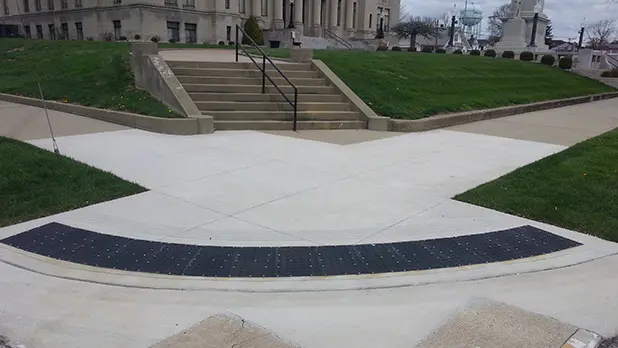
A major advantage of TufTile’s galvanized-steel line is availability in both wet-set and surface-applied configurations. Wet-set products are incorporated while concrete is placed, making them appropriate for new construction or concrete replacement. Surface-applied products attach to cured surfaces and can be useful for retrofit work. Having the same basic material available across both installation approaches can simplify material continuity across phased or mixed-condition projects.
That flexibility can be useful on projects that contain more than one concrete condition. A new curb ramp, for example, may lend itself to a wet-set installation, while an existing adjacent surface may call for a surface-applied product. Being able to specify galvanized steel in either configuration allows the installation method to respond to the substrate and construction scope without necessarily changing the base material.
Powder-Coated and Unfinished Appearance
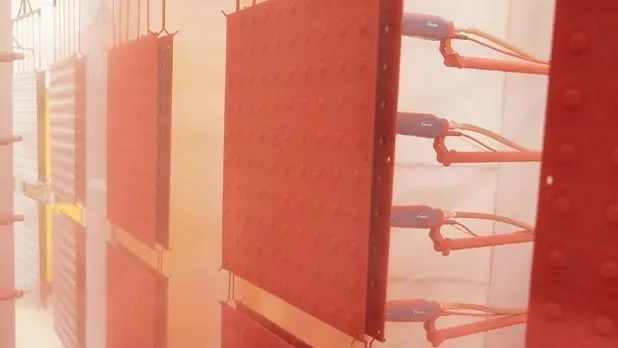
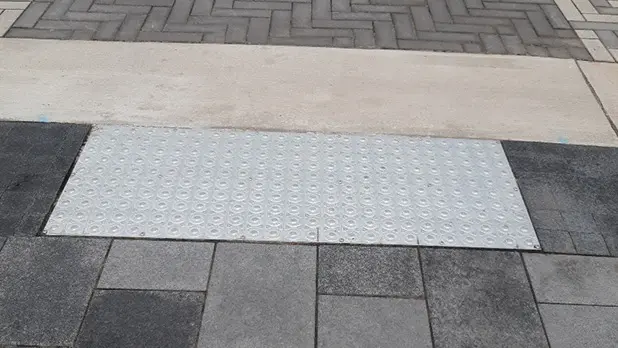
TufTile performs powder coating in-house. Its process includes multi-stage pretreatment with a zirconium rinse followed by powder application, producing a corrosion- and UV-resistant finish. Galvanized steel is also available in an unfinished natural appearance. Color selection should account for the visual-contrast requirements that apply to the project, not simply architectural preference.
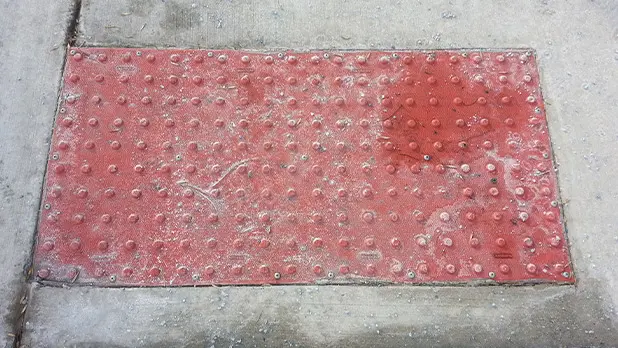
Finish selection should be coordinated with both accessibility and maintenance considerations. Visual contrast needs to satisfy the requirements governing the project, while the chosen finish also needs to make sense for the surrounding pavement and expected exposure. Where powder coating is specified, chips or wear should be addressed as part of routine inspection; where unfinished galvanized steel is selected, teams should understand the natural appearance of the material and how it fits the project’s design intent.
Replaceability and Long-Term Planning
Replaceability changes the maintenance equation because the warning surface and the surrounding concrete do not necessarily have to share the same service-life decision. If a tile is damaged while the concrete remains sound, TufTile’s replaceable galvanized-steel system may allow crews to address the affected component rather than reconstructing an otherwise serviceable curb ramp or slab, depending on installation conditions. For municipalities, facility owners, and others managing many installations, that can be an important consideration when comparing systems at the specification stage.
Where Galvanized Steel Fits in Material Selection
Galvanized steel is not the default answer for every detectable warning installation. TufTile also offers cast iron and polymer systems, and each material brings a different combination of weight, appearance, installation options, maintenance considerations, and performance characteristics.
Galvanized steel becomes particularly compelling when a project calls for a rigid metallic tile, defined G90 corrosion protection, powder-coated or unfinished appearance options, and the ability to choose between wet-set and surface-applied installation. It may also warrant consideration in environments where snow-removal operations and demanding exterior exposure are part of the long-term maintenance picture.
For specifiers, the key is to evaluate the complete system rather than a single material property. Gauge, finish, installation method, substrate, climate, traffic, maintenance practices, replacement strategy, and applicable project requirements all contribute to whether a galvanized steel DWT is the right fit.