Detectable warning tiles are designed for long-term use in pedestrian environments, but no outdoor walking surface is immune to wear or damage.
Traffic, weather, pavement movement, maintenance equipment, moisture, snow and ice operations, and other site conditions can change an installation over time. Eventually, an owner may question if a detectable warning surface still needs routine maintenance, if it can be repaired, or if it is time to replace it.
There is no single age at which every detectable warning tile should be replaced. A better decision is based on the condition and function of the installed surface.
Detectable Warning Tiles Don’t Have a Universal Replacement Schedule
Two detectable warning installations of the same age can be in very different condition.
One may be located at a busy transit facility and experience continuous pedestrian traffic, winter maintenance, deicing materials, and rolling equipment. Another may see lighter use and less environmental exposure.
Material and installation method matter, too. Galvanized steel, cast iron, and polymer products have different characteristics, and wet-set, surface-applied, and replaceable systems interact with the surrounding pavement differently.
Instead of using age alone, owners can periodically assess whether the installation continues to provide the tactile and visual information it was intended to communicate.
Current tactile-wayfinding guidance includes inspection, cleaning, and replacement of damaged tactile elements as parts of ongoing maintenance.
Signs a Detectable Warning Tile May Need Attention
Not every scratch, stain, or visible change means a tile has reached the end of its service life.
The conditions that deserve closer attention are those that may affect the tactile surface, stability of the installation, visual contrast, or surrounding walking surface.
Truncated Domes Are Broken or Significantly Worn
The raised truncated-dome pattern is what gives a detectable warning surface its recognizable tactile character.
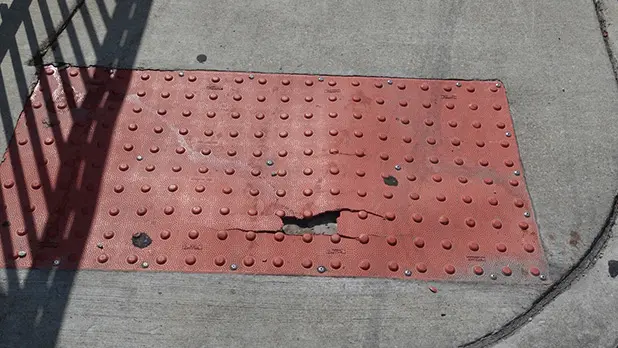
If individual domes become broken, flattened, missing, or significantly worn, the condition deserves evaluation, particularly when damage extends across enough of the surface to change the consistency of the tactile field.
A small localized defect may call for a different response than widespread deterioration. The extent and location of the damage can help determine whether repair is feasible or replacement is more appropriate.
The Tile Is Loose or Moving
A detectable warning tile should remain securely integrated with or attached to the walking surface according to its installation system.
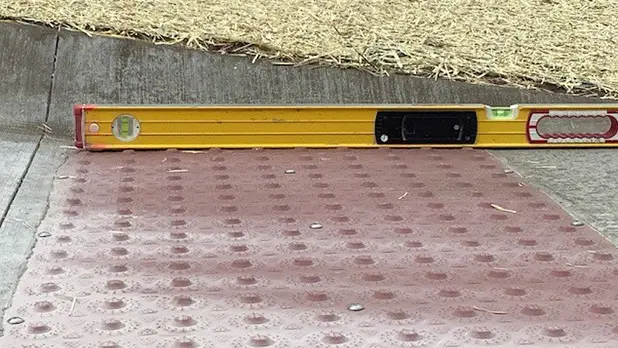
Movement, lifting, separation, or instability shouldn’t be treated simply as cosmetic wear.
For a surface-applied system, the condition may involve fasteners, sealant, edges, the tile itself, or the concrete substrate. For a wet-set installation, movement or separation may indicate a different issue involving the tile, concrete, or anchoring system.
Before replacing the tile, determine why it became loose. Installing a new component without correcting an underlying substrate or installation problem may simply recreate the condition.
Edges Are Damaged or Lifting
Tile edges deserve particular attention because they form the transition between the tactile surface and adjacent pavement.
Cracking, lifting, separation, deformation, or significant edge damage can indicate that the installation needs repair. Edge conditions can also expose the tile to additional impact from pedestrian traffic, wheels, maintenance operations, or snow-removal equipment.
Whether the appropriate response is localized repair or full replacement depends on the product and severity of the damage.
Damage Has Altered the Surface
Impact from maintenance or construction equipment can sometimes damage a detectable warning surface before normal material wear would otherwise call for replacement.
Snowplows, utility work, pavement repairs, vehicles, or other equipment operating near the installation may cause localized damage.
In those situations, the age of the tile is largely irrelevant. A relatively new tile can need replacement if a significant event has compromised it.
Surface Appearance Alone Doesn’t Always Tell the Whole Story
An older detectable warning surface won’t necessarily look exactly as it did on installation day.
That doesn’t automatically mean it needs to be removed.
Cast iron develops a different surface appearance than powder-coated galvanized steel. Polymer color is integral to the material, while coated steel uses an exterior finish. Dirt, staining, ordinary wear, and environmental exposure can further change appearance.
The more useful question is whether the observed change is cosmetic or functional.
A mark on a finish may have little effect on the tactile surface. Extensive coating deterioration, material damage, or another condition affecting product performance deserves a different level of attention.
Manufacturer product information can help owners evaluate the characteristics of the specific material rather than applying the same expectations to every type of DWT.
Loss of Visual Contrast Can Also Matter
Detectable warning surfaces provide both tactile and visual information.
Applicable accessibility criteria address visual contrast between detectable warnings and the adjacent walking surface. For pedestrians with low vision who use visual information for navigation, that distinction can help identify the warning area.
Over time, the relationship between the two surfaces can change.
The detectable warning may fade or become stained. Adjacent concrete may darken, weather, be resurfaced, or be replaced. A repair could introduce a new pavement color. The tile itself may remain physically intact while the overall visual condition is different from when it was installed.
Reduced contrast therefore belongs in a long-term condition assessment.
That doesn’t mean every color change automatically requires replacement. It means the finished combination of tile and surrounding pavement should still be evaluated against the applicable project requirements.
Sometimes the Problem Is the Pavement, Not the Tile
This distinction can save a project from replacing the wrong thing.
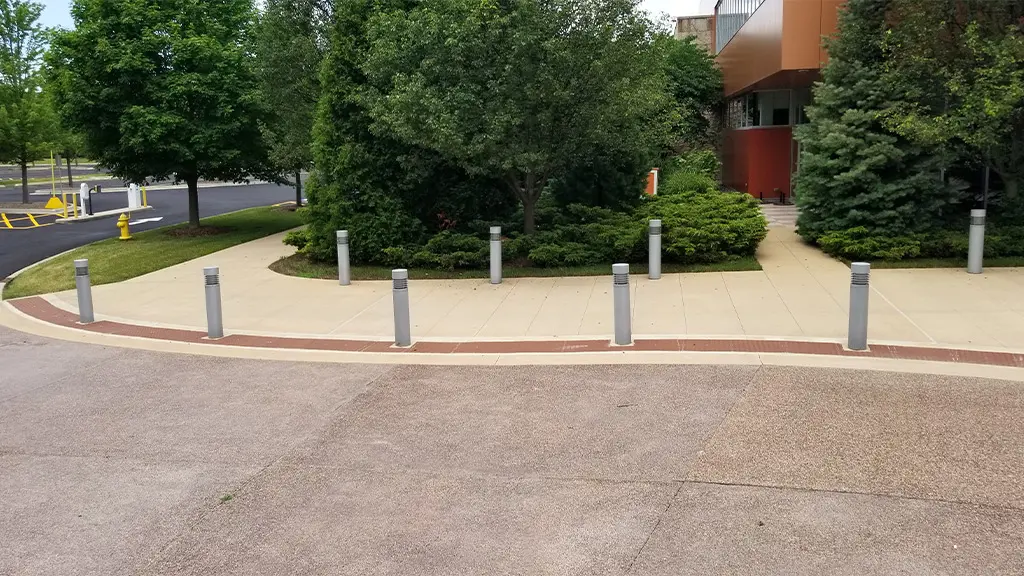
Suppose a detectable warning tile remains intact, but the surrounding concrete has cracked, settled, spalled, or separated from its edges.
Replacing the tile alone may not resolve the underlying condition.
Likewise, drainage problems or repeated water accumulation can affect the area around an installation. Pavement movement can create uneven transitions. Failed concrete can undermine a system that would otherwise still be serviceable.
Long-term maintenance guidance specifically calls for monitoring deterioration of the surrounding pavement along with the tactile surface itself.
Before deciding on replacement, identify whether the issue originates with the tile, the attachment/anchoring system, the surrounding pavement, or a combination of the three.
That diagnosis can determine the appropriate scope of repair.
Clean It Before You Condemn It
Some apparent deterioration is actually accumulation.
Dirt, leaves, sediment, snow, ice, gum, or other debris can collect on or between truncated domes. Depending on the environment, staining can also make the surface look significantly older or more deteriorated than it is.
Cleaning the area can reveal the actual condition of the tactile surface.
It also restores a clearer view of individual domes, joints, fasteners, edges, and surrounding pavement so they can be evaluated properly.
Maintenance guidance for tactile surfaces emphasizes keeping them clear of debris and obstructions.
If the surface is intact once cleaned, replacement may not be necessary.
Repair or Replace? Look at the Scope of the Problem
Replacement doesn’t always need to be an all-or-nothing decision.
A condition confined to a small area may have a different solution from deterioration extending across an entire warning field.
When evaluating the scope, consider:
- How much of the tactile surface is affected?
- Is the tile itself damaged or is the issue limited to an attachment or edge?
- Is the surrounding pavement sound?
- Can the affected component be repaired according to the manufacturer’s recommendations?
- Is an individual tile replaceable?
- Would repair restore the intended condition of the installation?
- Is the same problem appearing repeatedly across the surface?
This is where knowing the specific system that was originally installed becomes particularly valuable. Product records, photographs, submittals, installation instructions, and warranty information can help determine what repair or replacement options are available.
The Installation System Can Change the Replacement Process
Finding that a tile needs replacement is one question. Determining what has to be removed to replace it is another.
Surface-Applied Systems
Surface-applied detectable warning tiles are installed on existing concrete. Depending on the product and the condition of the substrate, replacing a damaged tile may allow the existing pavement to remain in place.
The old component must still be removed appropriately, the concrete evaluated, and the replacement installed according to current manufacturer instructions and project requirements.
Traditional Wet-Set Systems
Wet-set tiles are incorporated into fresh concrete during construction.
If a traditional embedded tile later requires replacement, the repair can involve work to the surrounding concrete depending on the system, extent of damage, and project conditions.
That makes it especially important to determine whether the tile actually needs replacement or whether another localized repair is possible before demolition begins.
Replaceable Wet-Set Systems
Some wet-set systems are specifically engineered with future replacement in mind.
Replaceable detectable warning systems use an anchoring assembly embedded in the concrete with a tactile surface that can later be removed and replaced while the embedded system and surrounding concrete remain in place.
TufTile offers replaceable systems in galvanized steel, cast iron, and polymer.
For owners managing large inventories of curb ramps, platforms, streetscapes, campuses, or other pedestrian infrastructure, this can reduce the scope of future work when an individual warning surface eventually needs replacement.
Don’t Automatically Replace an Old Tile With the Same Thing
Replacement is also an opportunity to confirm that the existing installation still makes sense.
A tile may have been installed many years earlier. Since then, the surrounding pavement may have changed, a curb ramp may have been reconstructed, agency details may have been updated, or different products and configurations may now be available.
Before ordering a like-for-like replacement, confirm:
- Current applicable accessibility requirements
- Project or agency specifications
- Required warning dimensions and placement
- Existing pavement condition
- Material and installation method
- Color and visual contrast
- Tile dimensions and configuration
- Availability of the original product
- Current manufacturer installation requirements
This is particularly important when the entire warning surface or surrounding concrete is being reconstructed, rather than simply exchanging one damaged component within an otherwise sound existing system.
Replacement work should address the conditions that exist now, not rely solely on what was specified when the original installation was built.
Repeated Damage May Point to a Bigger Problem
If the same location keeps requiring repair, replacing the tile again may treat the symptom rather than the cause.
Look at what is happening around it.
Is snow-removal equipment repeatedly striking an edge? Is water collecting in the area? Is adjacent pavement moving? Is heavy equipment crossing a product that wasn’t selected with those conditions in mind? Is an installation detail contributing to recurring damage?
Patterns matter.
A maintenance history that shows repeated failures in the same location can help project teams determine whether the next repair should involve a different product, installation method, pavement repair, maintenance practice, or other change.
This is one reason documenting inspections and repairs over time can be so useful: one damaged tile is an event; repeated damage can reveal a trend.
Replacement Can Be Planned Before It’s Needed
The easiest replacement to manage is often one that was considered during initial product selection.
Owners responsible for long-lived infrastructure can ask questions early:
- Can individual tiles be replaced?
- Would replacement require concrete demolition?
- How is the product identified years later?
- What records should be retained?
- Who is responsible for periodic inspection?
TufTile’s replaceable-system guidance frames this as part of lifecycle planning: systems designed for individual tile replacement can help preserve surrounding concrete, reduce the scope of future repair work, and simplify maintenance when replacement eventually becomes necessary.
For municipalities, transit agencies, campuses, and other owners managing many installations, those considerations can become part of broader asset-management planning rather than being addressed one damaged tile at a time.
Replace Based on Condition, Not the Calendar
There isn’t one number of years that tells an owner when a detectable warning tile has reached the end of its useful service.
Instead, pay attention to what the installation is telling you.
Broken or significantly worn domes, instability, damaged edges, widespread surface deterioration, reduced visual contrast, and other conditions affecting the warning surface can signal that repair or replacement should be evaluated. Problems in the surrounding pavement may require a different solution altogether.
Regular inspection makes those decisions easier because deterioration can be identified and documented as it develops.
And when replacement is necessary, understanding the original system and the cause of the damage can help ensure the next repair addresses more than what is visible on the surface.