A detectable warning tile submittal provides the technical information project teams need to evaluate a proposed product before installation. But with dimensional drawings, test data, material information, installation details, colors, sizes, and other specifications packed into a single document, knowing what to look for can make the review process easier.
A useful review considers whether the specific product, material, configuration, and installation method align with the project documents and whether the information needed to make those determinations is clearly documented.
Here are some of the key details to look for when reviewing a detectable warning tile submittal.
Confirm the Exact Product Being Submitted
Start with the basics: What product is actually being proposed?
Detectable warning tiles can vary by material, thickness or gauge, installation method, size, finish, and other characteristics. A manufacturer may offer several products within the same detectable warning line, so confirming the exact configuration is an important first step.
Look for Product-Specific Details
Depending on the product, these may include:
- Material
- Tile size
- Thickness or gauge
- Wet-set or surface-applied configuration
- Standard or radius configuration
- Color or finish
- Manufacturer and product identification
This information can then be compared against the drawings and specifications to confirm that the product being submitted is the one intended for the project.
Review Tile and Truncated Dome Dimensions
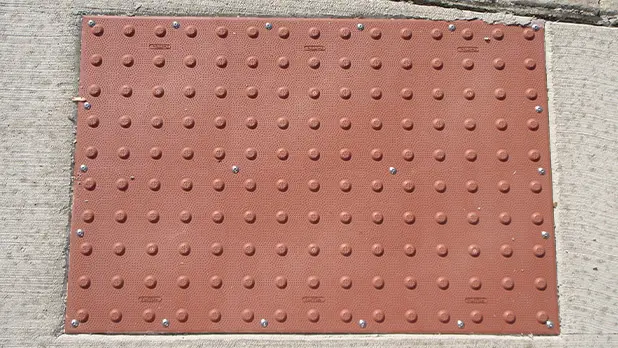
Detectable warning surfaces rely on standardized truncated-dome geometry to create a recognizable tactile warning. The submittal should provide dimensional information that allows the proposed product to be evaluated against the applicable project criteria.
Check the Dome Geometry
Relevant measurements can include dome height, base diameter, top diameter, center-to-center spacing, and base-to-base spacing.
Overall tile dimensions matter as well. Knowing the available tile sizes helps project teams confirm quantities and determine how the product will fit within the detectable warning area shown on the plans.
For curved conditions, the review may also need to account for a radial rather than a standard square-grid configuration. The important thing is to evaluate the geometry actually being proposed rather than assuming every detectable warning tile uses the same layout.
Check Material and Performance Information
The material named on the submittal tells only part of the story. Product documentation may also contain physical properties and test results that help characterize how the specific product performs.
Depending on the material and project requirements, this information may address characteristics such as:
- Slip resistance
- Abrasion resistance
- Impact resistance
- Tensile or compressive properties
- Weathering or environmental exposure
- Coating or finish performance
Not every test applies to every material or every project. The purpose of reviewing this information isn’t to accumulate the longest possible list of performance claims; it’s to confirm that the documentation addresses the criteria required by the project and that those results correspond to the product being submitted.
Verify the Installation Method
A submittal should also make it clear how the proposed tile is designed to be installed.
That matters because wet-set and surface-applied detectable warning systems are fundamentally different configurations.
Wet-Set Systems
Wet-set tiles are installed in fresh concrete as part of the concrete placement. The product documentation should correspond to the specific wet-set configuration being proposed, including the anchoring or embedment design where applicable.
Surface-Applied Systems
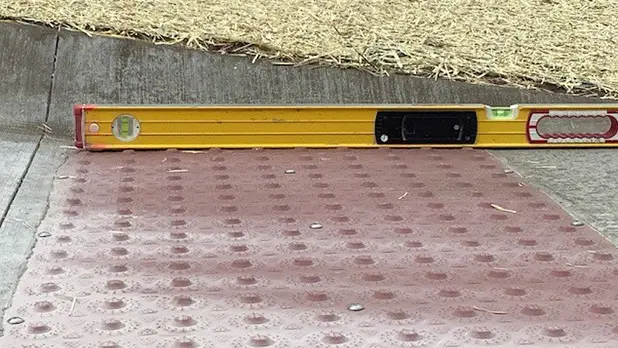
Surface-applied tiles are installed over an existing cured surface using the manufacturer’s specified attachment system and installation procedure.
TufTile’s surface-applied galvanized steel system, for example, uses corrosion-resistant stainless-steel drive pins to secure the tile to concrete.
Confirming the installation configuration during submittal review helps ensure that the selected product makes sense for the project’s substrate, construction phase, and intended installation approach.
Pay Attention to Color and Finish
Color isn’t simply a design choice for detectable warning surfaces. Applicable accessibility criteria address visual contrast between the detectable warning and the adjacent walking surface.
A submittal can identify the product’s available or selected color and finish, but that information still needs to be considered in the context of the project.
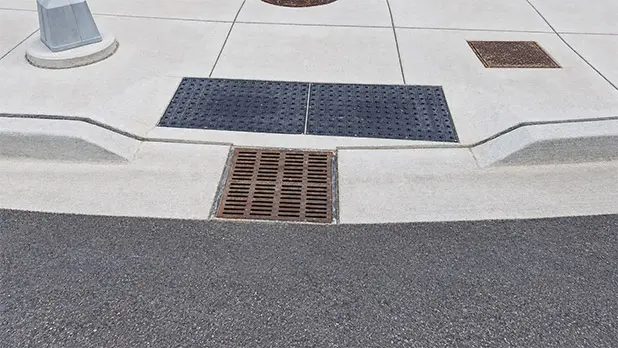
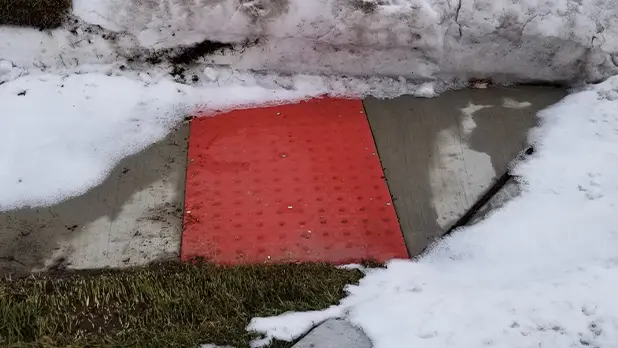
A color that creates clear contrast against light concrete, for example, may function differently against dark pavers or asphalt. The project team should evaluate the proposed selection against the surrounding walking surface and any color requirements established by the governing agency or project documents.
For coated metal products, the submittal may also provide information about the finish itself. TufTile’s galvanized steel detectable warning tiles, for example, use an in-house powder-coated finish designed for UV and slip resistance.
Look for Special Sizes and Radius Conditions
Standard square or rectangular installations are relatively straightforward to review. Curved curb ramps and other special conditions, however, deserve a closer look.
TufTile’s galvanized steel detectable warning products, for example, are available in multiple standard sizes as well as radius configurations.
Where a project includes a curved curb line, project teams should confirm that the proposed configuration corresponds with the actual radius and intended detectable warning layout. The product submittal can provide information about what the manufacturer offers, while project drawings establish how those components are intended to fit the site.
This distinction is important: product availability and project layout are related, but they aren’t the same thing.
Review Warranty and Supporting Documentation
Warranty information can be another useful part of the review, particularly when the project specifications establish warranty requirements.
Because warranty terms can differ among materials and products, confirm that the warranty applies to the specific product being submitted rather than relying on a general assumption about the manufacturer’s product line.
Related technical resources may also be useful during review and construction, including:
- Installation instructions
- Product specifications
- CAD drawings or details
- Color information
- Testing or safety data
- Certifications or other project-required documentation
Keeping the approved product information and supporting documents together can provide a useful reference during installation, inspection, project closeout, and future maintenance.
Remember What the Product Submittal Doesn’t Tell You
A manufacturer-provided submittal can document the characteristics of a detectable warning product, but it does not determine where that product is required or exactly how it should be laid out on a particular site.
Those decisions depend on the requirements governing the project.
Federal accessibility standards, state or local requirements, transportation-agency criteria, owner standards, and project specifications can intersect differently depending on the facility and location. TufTile can provide product dimensions and technical data, but the designer and authority having jurisdiction determine how applicable requirements are addressed on the project.
That means product review and installation review should remain connected but distinct.
A detectable warning tile may have the appropriate dome geometry and material characteristics, for example, while the project drawings still need to correctly address placement, overall warning-surface dimensions, orientation, visual contrast, and special conditions.
A Quick Detectable Warning Submittal Checklist
When reviewing a detectable warning tile submittal, a simple checklist can help keep the most important details in view:
- Product: Is the exact material and product configuration clearly identified?
- Dimensions: Do the tile and truncated-dome dimensions correspond with the applicable project criteria?
- Performance: Is the required product or test data included?
- Installation: Is the correct wet-set or surface-applied system being proposed?
- Color: Does the selected color support the required visual contrast?
- Layout: Are radius or other special conditions addressed where applicable?
- Warranty: Does the warranty information correspond to the submitted product?
- Documentation: Are any additional technical documents required by the project included or readily available?
The exact review process will vary by project, but these checkpoints provide a practical starting point for identifying discrepancies or unanswered questions before installation begins.
Make the Submittal Work for the Project
A well-prepared manufacturer submittal puts detailed product information in one place. A thoughtful review connects that information back to the project.
By confirming the product, dimensions, performance information, installation method, color, special configurations, and supporting documentation before materials reach the field, project teams can catch questions earlier and create a clearer reference for everyone involved in installation and inspection.
The submittal isn’t the entire accessibility review, but it is an important point where the specified product, proposed product, and project requirements come together.