Cast iron brings a distinctly different set of characteristics to a detectable warning system than polymer or sheet steel. Its weight, rigidity, wet-set installation, aging characteristics, and traditional infrastructure appearance can make it well suited to certain projects while making another material more practical elsewhere.
For specifiers considering cast iron detectable warning tiles, the useful question is not whether cast iron is inherently better than another material. It is whether those characteristics match the construction conditions, maintenance expectations, and design intent of the project.
Why Cast Iron Remains a Distinct Option
Cast iron has a long history in streetscape and infrastructure applications. As a detectable-warning material, it provides substantial mass and rigidity along with an appearance that can work naturally in civic and traditional streetscape environments.
TufTile offers cast iron as a wet-set system, making it particularly relevant when concrete is already being placed or replaced.
Understanding Cast Iron DWTs
A Heavy, Rigid Material
TufTile lists its cast iron at approximately 9.25 pounds per square foot, making it the heaviest of its detectable warning materials.
That mass can be advantageous in demanding installations, but it also affects shipping, handling, and placement. Contractors should account for tile weight when planning installation and concrete finishing.
Wet-Set Installation
TufTile’s cast-iron detectable warnings are installed in fresh concrete rather than surface-applied over cured pavement.
This makes cast iron a natural candidate for new construction, full curb-ramp replacement, and streetscape reconstruction. It is less suited to a project whose primary goal is preserving existing concrete while adding a surface-applied warning.
Natural and Finished Appearance
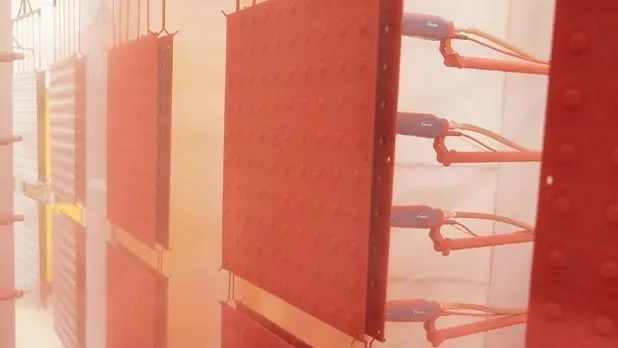
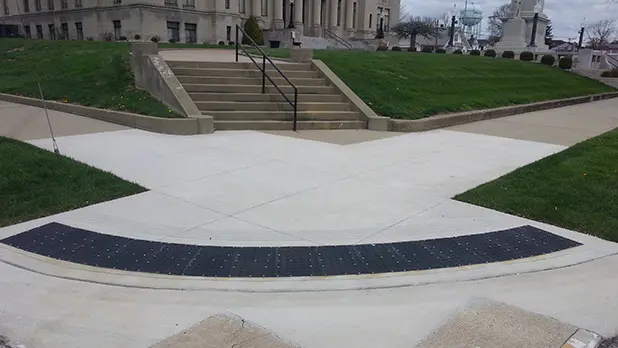
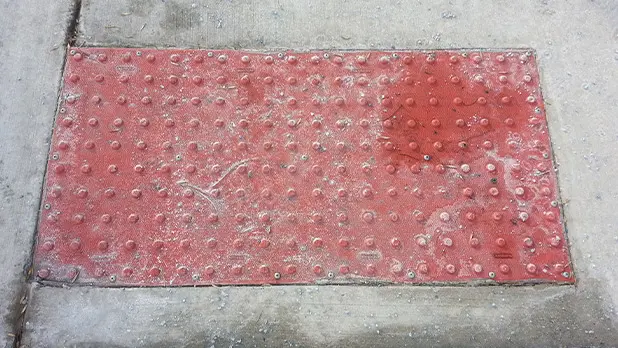
Cast iron can provide a traditional infrastructure aesthetic. An unfinished surface develops a natural patina over time, while TufTile also offers powder-coated cast-iron finishes.
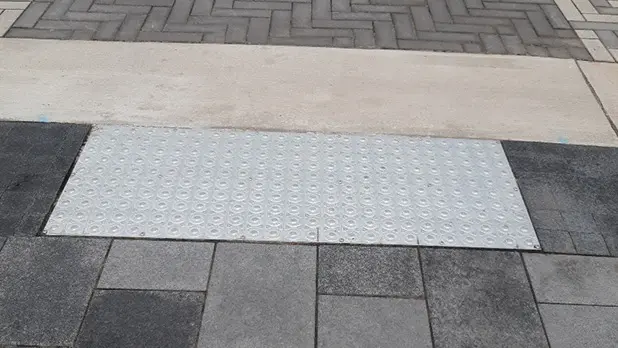
Appearance still needs to be coordinated with applicable visual-contrast requirements and any color criteria established by the owner or agency.
Durability and Maintenance Considerations
Cast iron is often evaluated for projects where durability and demanding exterior conditions are important.
Research summarized in the TCRP guidance identified cast iron and solid steel as materials worth considering in environments with frequent snow removal. At the same time, older cast-iron tactile products have raised wet-slip concerns in some agency experience, while newer products may incorporate treatments intended to improve slip resistance.
The important lesson is to evaluate the performance characteristics of the actual product being specified, not make assumptions based on material name alone.
Cast iron is not maintenance-free. Owners should monitor surface condition, surrounding concrete, coating wear where applicable, debris, and the effects of snow-removal or deicing operations. TufTile lists a 10-year performance warranty for its cast-iron line.
Cast Iron vs. Galvanized Steel or Polymer
Each TufTile detectable warning material brings a different combination of characteristics.
Cast iron offers substantial weight, rigidity, wet-set installation, and a distinctive appearance.
Galvanized steel provides another metallic option and is available from TufTile in wet-set and surface-applied configurations.
Polymer provides substantially lower weight, integral color, and both wet-set and surface-applied options.
The comparison should include durability, installation conditions, climate, visual contrast, slip resistance, maintenance, appearance, traffic, and replacement strategy rather than assuming one material represents an automatic upgrade over another.
Where Cast Iron May Make Sense
Cast iron is particularly worth evaluating for new-concrete projects where a substantial metallic detectable warning surface and traditional infrastructure character fit the project.
Potential applications can include municipal streetscapes, civic environments, transit-related work, curb-ramp replacement programs, and projects whose standards or design intent favor cast iron.
It is less naturally aligned with retrofit work where existing concrete will remain and a surface-applied installation is preferred.
The final decision should come from the complete project requirements. Cast iron’s strengths are most useful when the installation method, operating environment, maintenance plan, and design intent actually call for them.