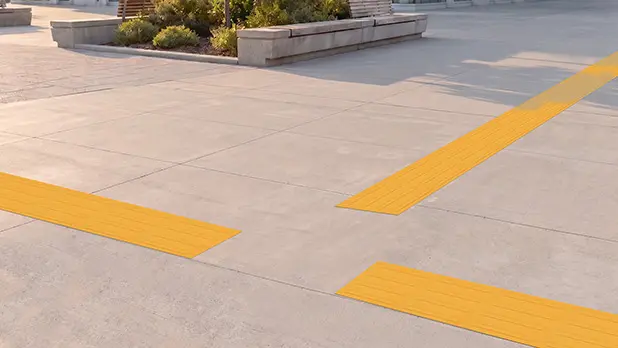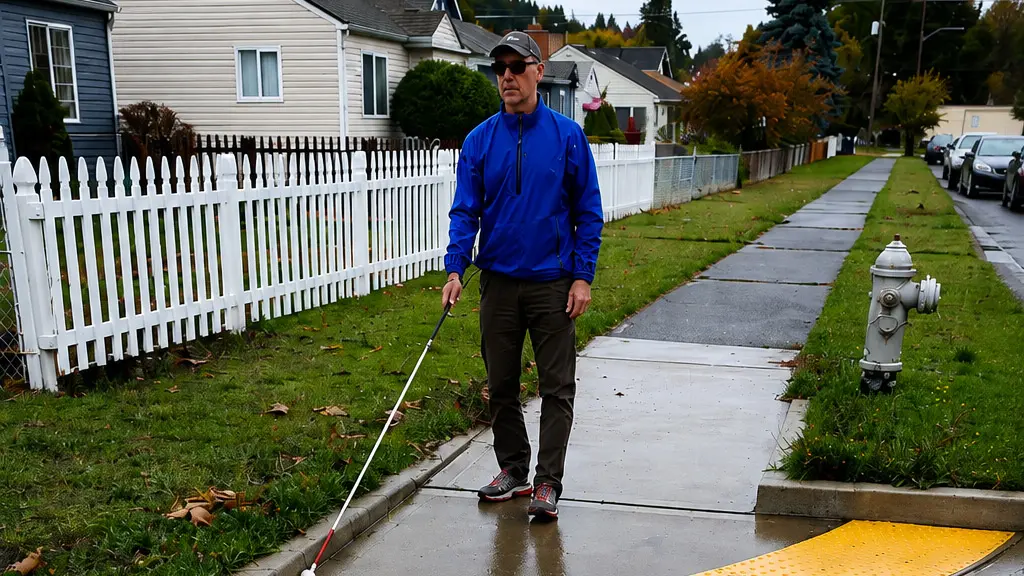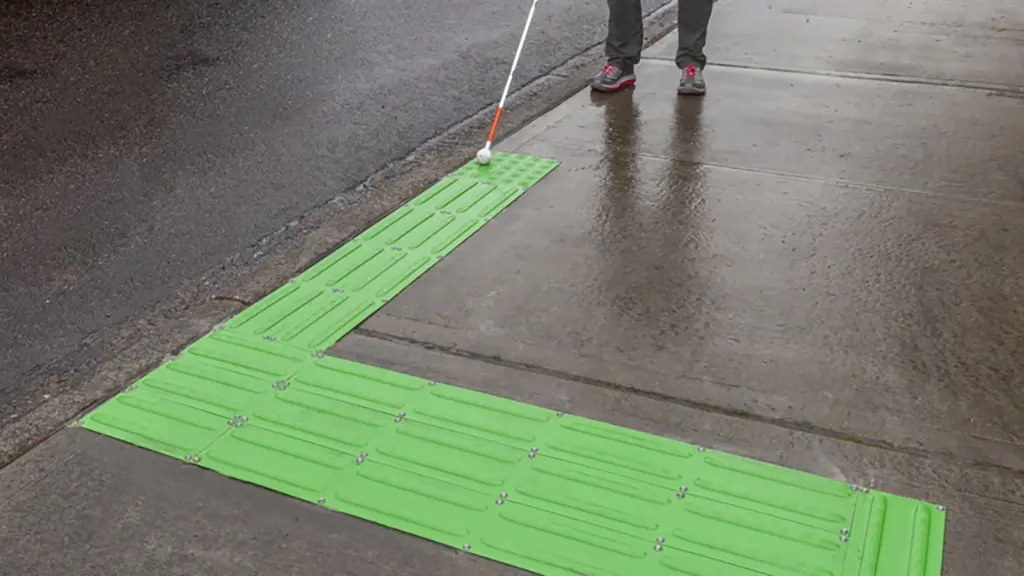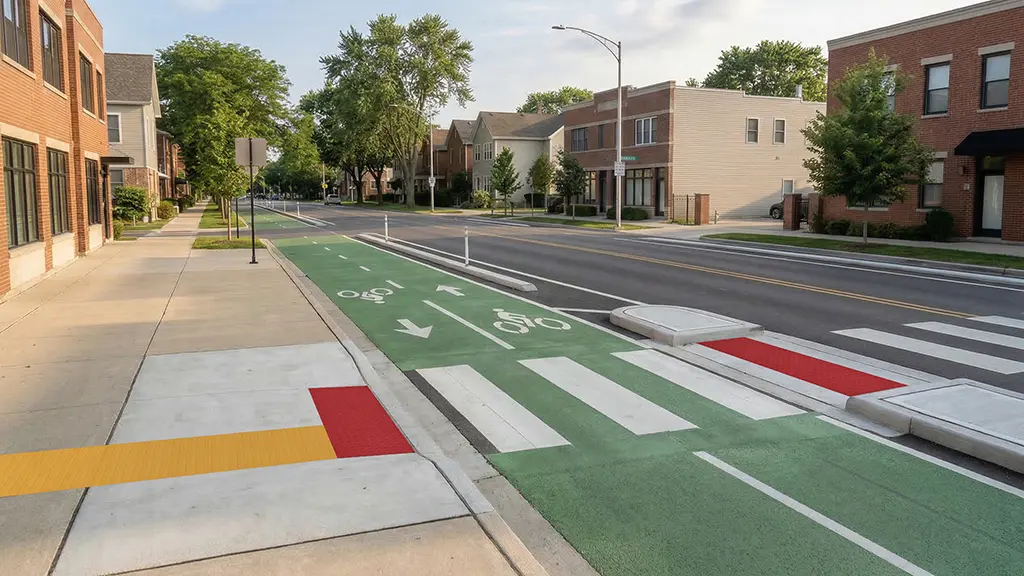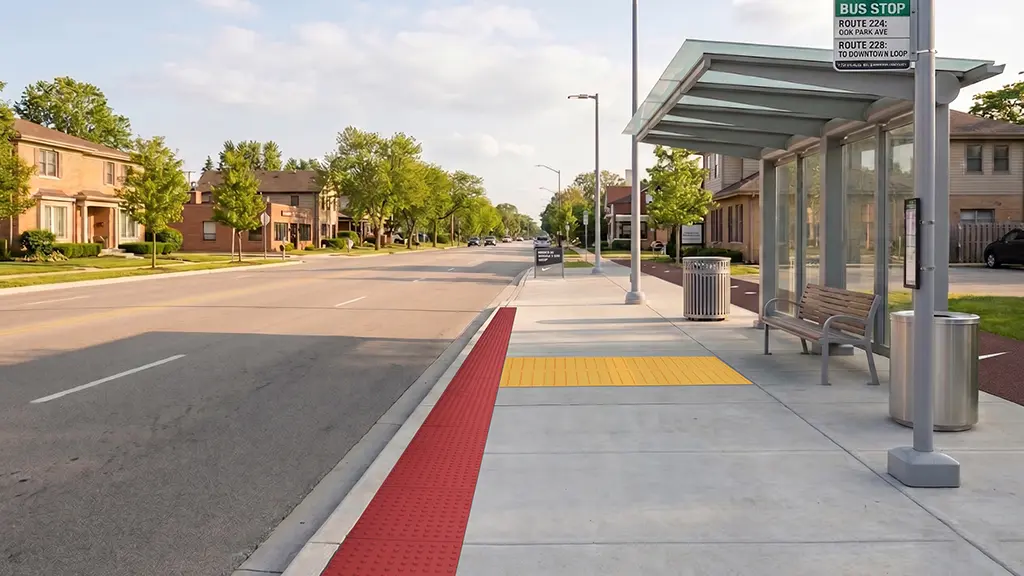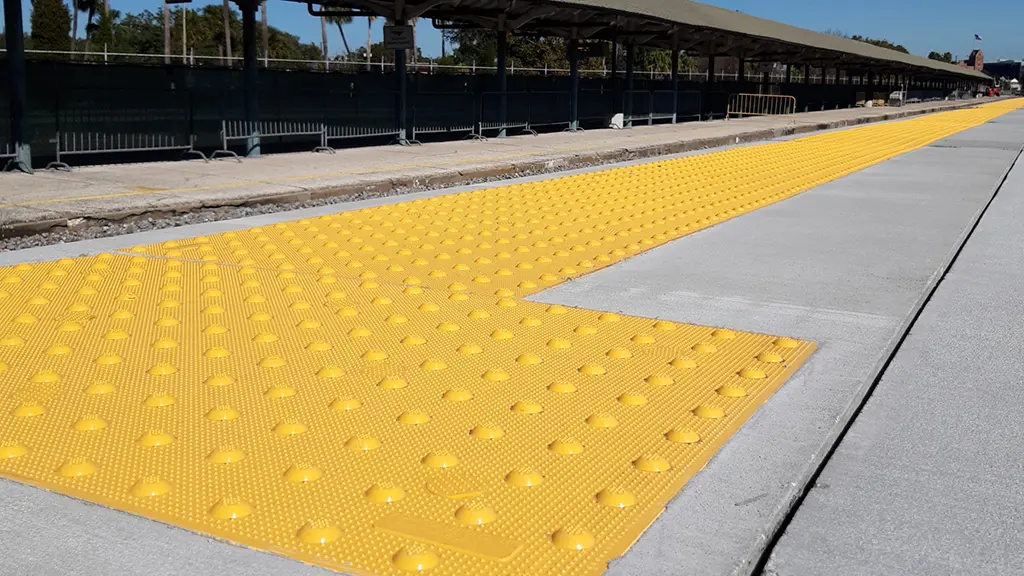
The distinctive field of raised, flat-topped domes found at many curb ramps, transit platforms, and other pedestrian transitions is not simply a textured paving treatment. Truncated domes have a specific purpose: they create the standardized tactile pattern used for detectable warning surfaces in the United States.
Their effectiveness depends on more than being noticeable. The geometry is designed to be detectable, recognizable as a warning, and traversable by pedestrians using a range of mobility methods.
What Is a Truncated Dome?
A truncated dome is a raised circular feature with a broad base and a smaller flat top. Multiple domes arranged in a regular grid create a detectable warning surface.
U.S. accessibility criteria establish dimensional ranges for the dome height, base and top diameters, and spacing. That controlled geometry distinguishes a detectable warning from arbitrary textured paving or decorative bumps.
The standardized shape can be detected underfoot or with a long cane while leaving channels between the domes for wheeled mobility.
Why Standardization Matters
A warning surface needs to do more than feel different from the pavement around it. A pedestrian also needs to recognize what that difference means.
This distinction is sometimes described as detectability versus discriminability. A tactile surface is detectable when a pedestrian notices it; it is discriminable when the pedestrian can distinguish it from other tactile patterns and interpret its message.
Standardized truncated domes provide a predictable warning cue rather than requiring pedestrians to learn a different hazard texture from project to project.
What the Pattern Communicates
Truncated domes communicate warning, not directional guidance.
At applicable locations, the detectable warning surface signals that a hazard or transition lies beyond the warning field. The pedestrian can then determine the appropriate next action based on the environment.
This is different from tactile directional indicators, which use raised bars to provide guidance, alignment, orientation, or location information. Preserving those separate meanings helps make tactile systems easier to interpret.
Why the Domes Are Truncated
The flat-topped shape balances tactile recognition with traversability.
Federal criteria establish a dome height of 0.2 inch along with controlled base and top diameters. Center-to-center and base-to-base spacing are also defined.
A full rounded bump, irregular cobble texture, or decorative paver does not automatically provide the same standardized tactile information. The dimensions and arrangement are part of what makes a detectable warning surface recognizable.
How Truncated Domes Are Arranged
Truncated domes are usually arranged in two different patterns that can work together when placed.
Square Grid Patterns
Straight detectable warning fields typically use a square grid in which rows of domes remain aligned in both directions.
This arrangement works naturally with rectangular tile modules and straight curb or platform conditions.
Radial Grid Patterns
Curved curb ramps can require a different approach. PROWAG recognizes radial dome grids, allowing the pattern to fan around a curve while maintaining an orderly warning field.
A radial layout is more than an aesthetic choice. Poorly planned field cutting can disrupt dome spacing or create irregular edges. TufTile offers radius components and its EasyArc planning tool to help coordinate curved detectable warning installations.
Visual Contrast Complements Tactile Detection
Detectable warning surfaces communicate through touch, but visual information is also important for many pedestrians with low vision.
Applicable federal criteria require the warning surface to contrast visually with the adjacent walking surface using a light-on-dark or dark-on-light relationship. The appropriate color therefore depends on the surrounding pavement rather than on one universally required detectable-warning color.
Visual contrast does not replace truncated-dome geometry. Instead, the visual and tactile characteristics work together to make the warning surface easier to identify.
A Small Pattern With a Specific Job
Truncated domes are only one component of an accessible pedestrian environment. They do not replace accessible-route geometry, curb-ramp requirements, pedestrian signals, signage, or directional guidance where those features are needed.
Their strength comes from doing one job consistently: providing a recognizable warning at locations identified by the governing accessibility requirements.
That consistency is precisely why the truncated-dome pattern should remain distinct from other tactile surfaces.