A raised tactile surface communicates information through its pattern, not simply through the fact that it can be felt underfoot or with a long cane. That makes the distinction between truncated domes and directional bars fundamental to the design of tactile walking surface indicator (TWSI) systems.
In U.S. practice, truncated domes have an established warning function, while raised directional bars can provide guidance, alignment, orientation, or location information. Understanding what each pattern is intended to communicate helps designers and specifiers avoid creating tactile cues that are technically detectable but unclear in meaning.
Two Patterns, Two Messages
The difference between the two patterns begins with the information a pedestrian is expected to receive. A field of truncated domes signals that attention is needed because a hazard or transition lies ahead. Parallel directional bars provide information that can help a pedestrian establish or maintain a route, find a feature, or align for a particular movement.
Those functions should remain distinct. Tactile wayfinding becomes harder to interpret when the same pattern is assigned different meanings from one location to another. For project teams, the first question should therefore be what information needs to be communicated, followed by which tactile pattern appropriately communicates it.
How the Two Tactile Patterns Differ
Truncated Domes Communicate Warning
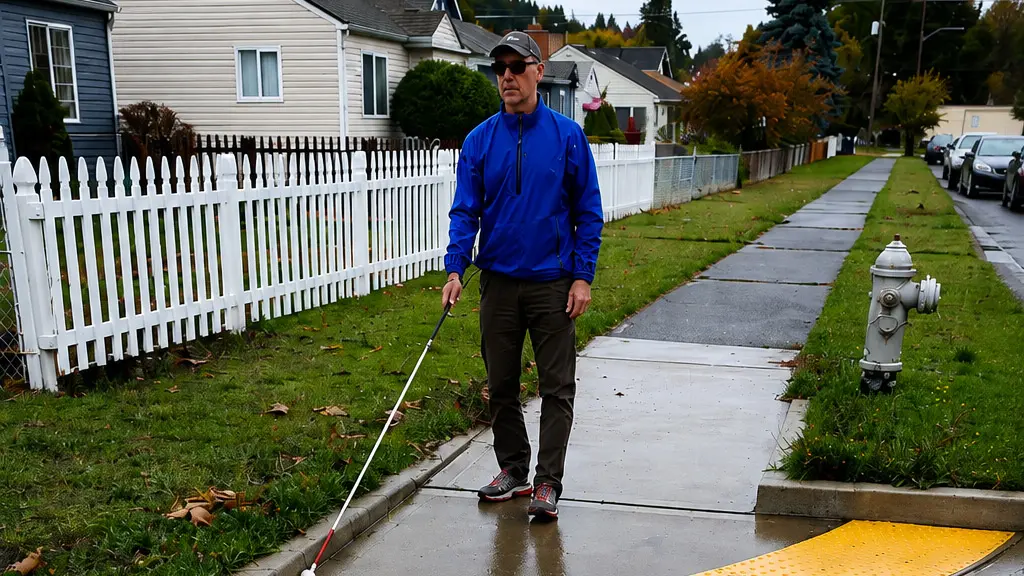
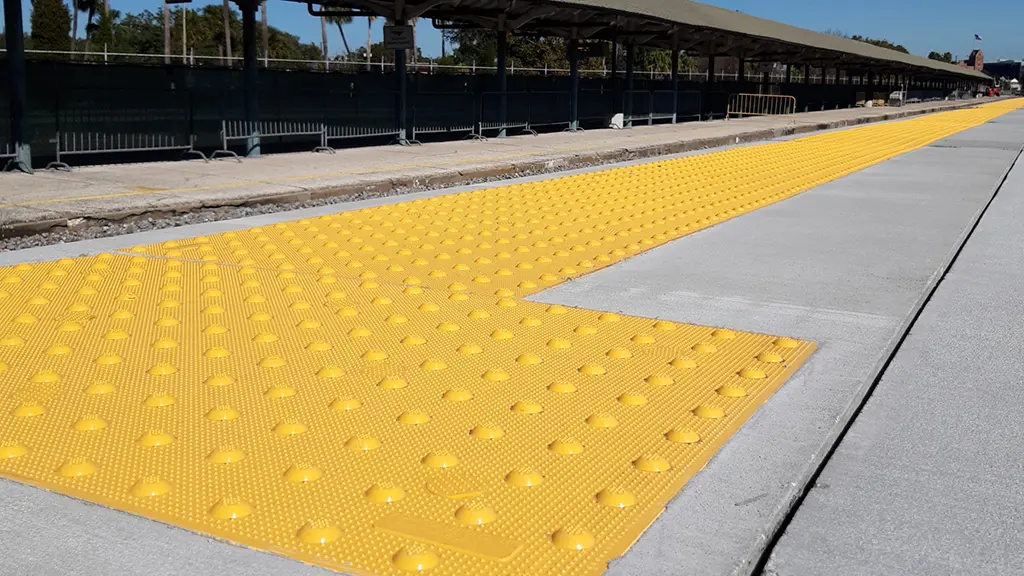
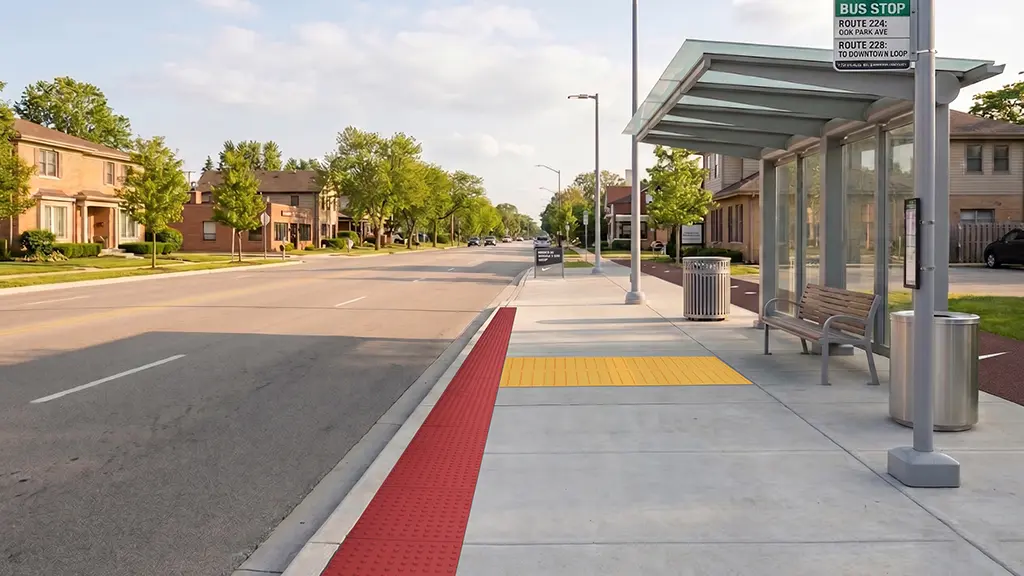
Truncated domes are the standardized pattern for detectable warning surfaces (DWSs) in the United States. They indicate a hazard on the opposite side of the surface, prompting a pedestrian to recognize the warning and determine the appropriate next action. Preserving that specific meaning is important; truncated domes should not be treated as generic attention fields or used to communicate unrelated wayfinding information.
Directional Bars Communicate Guidance
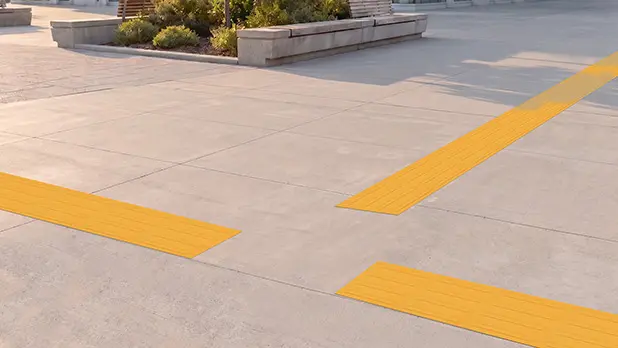
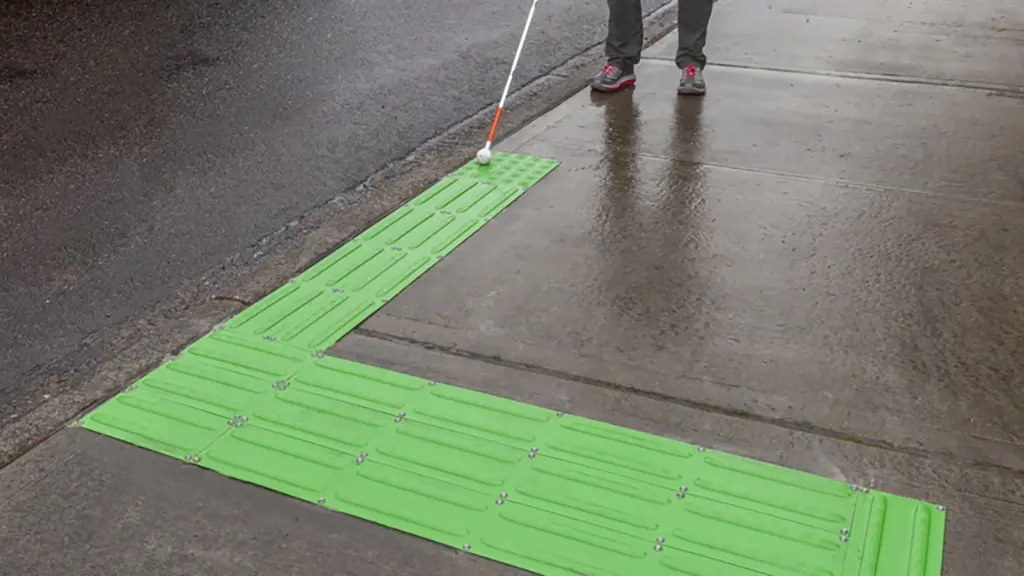
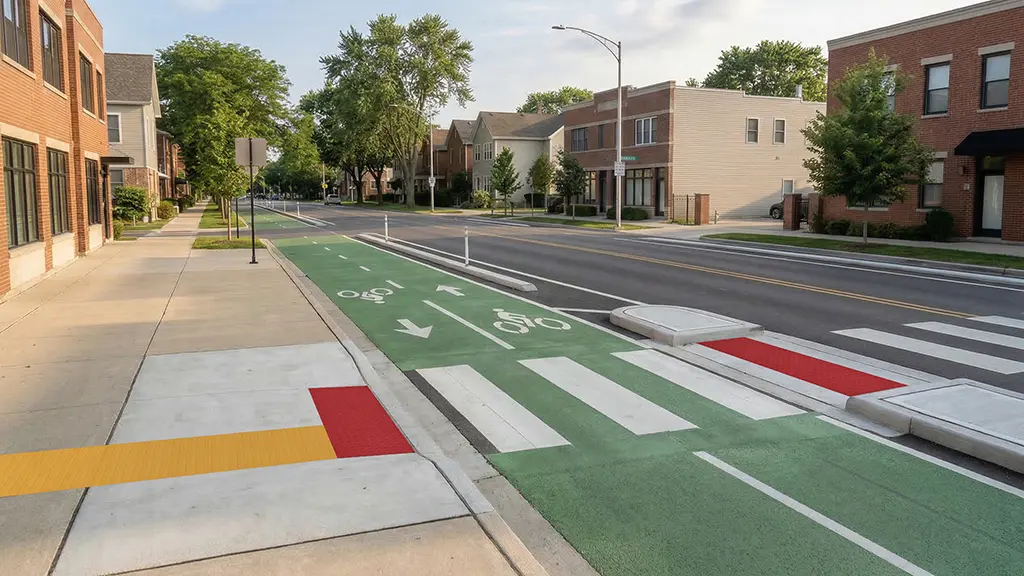
Raised parallel bars communicate guidance rather than warning. Depending on the wayfinding need and system configuration, tactile direction indicators (TDIs) can help a pedestrian follow a route, locate a feature or crossing, establish alignment, or identify a transit boarding location. Different configurations may be used for functions such as guide paths, sidewalk alerts, crossing alignment, and transit-door location.
Unlike truncated-dome detectable warnings, TDIs do not currently have established national U.S. standards governing their dimensions and use. Project teams should therefore distinguish applicable requirements from research-based guidance, agency criteria, and emerging practice when planning a TDI system.
Why Substituting One Pattern for the Other Creates Confusion
Predictability matters most when a pedestrian encounters a tactile system in an unfamiliar environment. If truncated domes communicate “hazard ahead” in one location but “turn here” somewhere else, the pedestrian has to rely more heavily on context to determine what the surface means. Keeping domes associated with warning and bars associated with guidance, alignment, or location makes the tactile information easier to interpret.
There is also a compliance distinction. Where a standardized detectable warning is required, a directional-bar surface should not be substituted simply because it is detectable. Conversely, using truncated domes as a generic wayfinding treatment can weaken their distinct warning meaning. Detectability alone does not make two tactile patterns interchangeable.
Where the Patterns May Work Together
Directional bars and truncated domes can be complementary when a pedestrian route requires both guidance and warning. A TDI path, for example, might help a pedestrian travel toward a street crossing or transit platform. At the appropriate point, the directional treatment ends and a truncated-dome surface communicates a different message: a hazard or transition lies ahead.
Choice points within a TDI network illustrate why preserving those distinctions matters. Research on tactile wayfinding has found that a blank area can effectively identify an intersection of three or more TDI path segments without introducing truncated domes for a non-warning purpose. In that situation, the absence of raised bars creates useful information while allowing the dome pattern to retain its established warning meaning.
Thinking about the system as a sequence of messages can help with layout. Instead of asking where tactile products can be added, designers can map the pedestrian route and identify where the information changes—from guidance, to a choice point, to alignment, to warning, for example. The tactile treatment can then respond to each specific need.
Material and Installation Choices Come After Function
Once the required tactile function is clear, teams can evaluate material, color, dimensions, installation method, and other project criteria. Those decisions affect durability, constructability, visual contrast, maintenance, and appearance, but they should not change the fundamental message of the tactile pattern.
TufTile offers truncated-dome DWS products in galvanized steel, cast iron, and polymer, along with galvanized-steel directional indicators. The material and installation system can therefore respond to project conditions while the tactile geometry continues to communicate its intended function.
Start With the Information the Pedestrian Needs
Tactile surface selection should begin with a simple question: What does the pedestrian need to know at this location? If the intended message is a warning, the project team should evaluate the applicable requirements for a truncated-dome detectable warning surface. If the need is guidance, alignment, orientation, or location information, a directional-indicator strategy may be appropriate.
Keeping those functions distinct makes specifications clearer and tactile systems easier to interpret. Domes and bars can work together within the same pedestrian environment, but their value comes from communicating different messages—not from being interchangeable forms of texture.