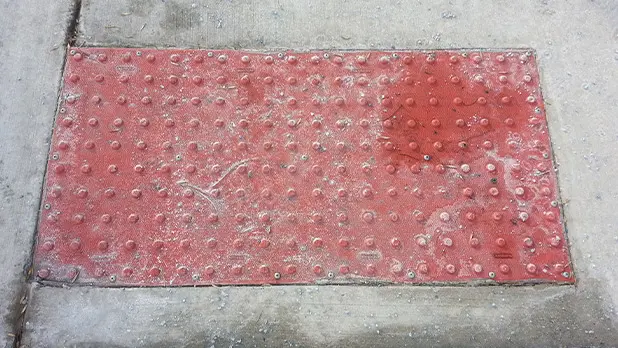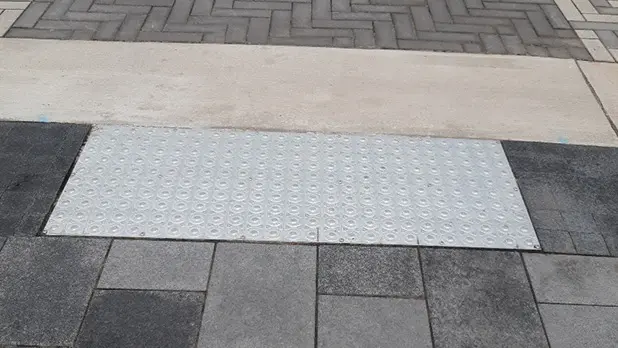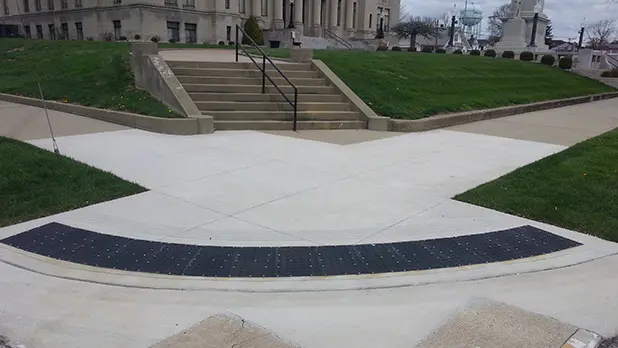
Municipalities may install detectable warning tiles at dozens—or hundreds—of locations over the course of a sidewalk improvement program. The individual sites won’t all look the same, but the decisions crews have to make shouldn’t start from scratch every time.
That is where a well-developed municipal standard can make a real difference. Consistent specifications give engineers, contractors, inspectors, and maintenance teams a common starting point. At the same time, those standards need enough flexibility to account for the curb geometry, pavement condition, drainage, and other details that vary from one location to another.
The goal isn’t to make every installation identical. It’s to make the process of planning and delivering them more consistent.
Build a Standard, Then Apply It to the Site
A municipal detectable warning detail can establish many of the decisions that should remain consistent from project to project: approved materials, color or contrast criteria, installation methods, required product documentation, and other specification requirements.
Then the individual site plan can address what changes.
A newly constructed intersection, for example, may allow the warning tile and concrete layout to be coordinated from the beginning. A sidewalk repair several blocks away may involve an existing curb ramp, older concrete, nearby joints, or drainage conditions that affect the installation.
Before carrying a standard detail onto a specific site, look at the conditions surrounding the warning surface. Where does the pedestrian route meet the street? What is the curb geometry? Where are the joints? How does water move through the area? Is the pavement new, or is the project working with an existing surface?
A standard detail works best when it answers the repeatable questions without hiding the site-specific ones.
Match the Installation Method to the Work
One of the most practical distinctions for a municipal project is whether crews are working with new or existing concrete.
New Concrete
When a sidewalk or curb ramp is being constructed or replaced, a wet-set detectable warning system can be incorporated into the concrete work. The tile position, orientation, edges, joints, and surrounding concrete can all be coordinated before placement.
This is the time to resolve those relationships on the drawings rather than leaving them for the installer to interpret in the field.
Existing Concrete
Retrofit projects raise a different set of questions. A surface-applied system can allow a detectable warning tile to be installed over existing cured concrete, but the condition of that concrete matters.
Cracking, flaking, uneven areas, previous repairs, or standing water may signal conditions that need to be addressed before installation. The project team should evaluate the substrate and follow the instructions for the exact surface-applied product being specified.
TufTile offers both wet-set and surface-applied detectable warning systems, allowing municipalities to select an installation method that fits the work being performed rather than forcing one approach onto every project.
Make the Bid Package Easier to Interpret
Municipal detectable warning specifications may be used by different contractors over many projects and several years. Clear, repeatable information can reduce ambiguity during bidding, submittal review, and installation.
The project documents should make it easy to identify:
- Where detectable warning surfaces are required and how they are laid out.
- Required dimensions and applicable color or visual-contrast criteria.
- Approved material and installation method.
- The product information contractors must submit for review.
- How substitutions, if permitted, will be evaluated.
For product submittals, ask for information tied to the exact product being proposed—not simply a general manufacturer brochure. Material, dimensions, finish or color, installation method, and current installation instructions give reviewers a much clearer basis for comparison.
Think Beyond the Initial Installation
Municipal infrastructure has a long life, and the person repairing a warning surface several years from now may have had nothing to do with the original project.
Recording the installed product, material, color, tile layout, and installation method can make future maintenance much easier. Where practical, an as-built photo can add useful context by showing surrounding pavement, joints, drainage, and how the tile was positioned at the site.
Replaceability may also be worth considering during product selection. A system that allows an individual tile or panel to be replaced can simplify future repairs compared with reconstructing a larger portion of the surrounding pedestrian surface.
For public works departments managing many locations, those maintenance details add up.
A good municipal standard does more than specify a detectable warning tile. It creates a repeatable framework for selecting, installing, reviewing, and eventually maintaining warning surfaces across many different sites.