Polymer Surface-Applied
Detectable Warning Surfaces
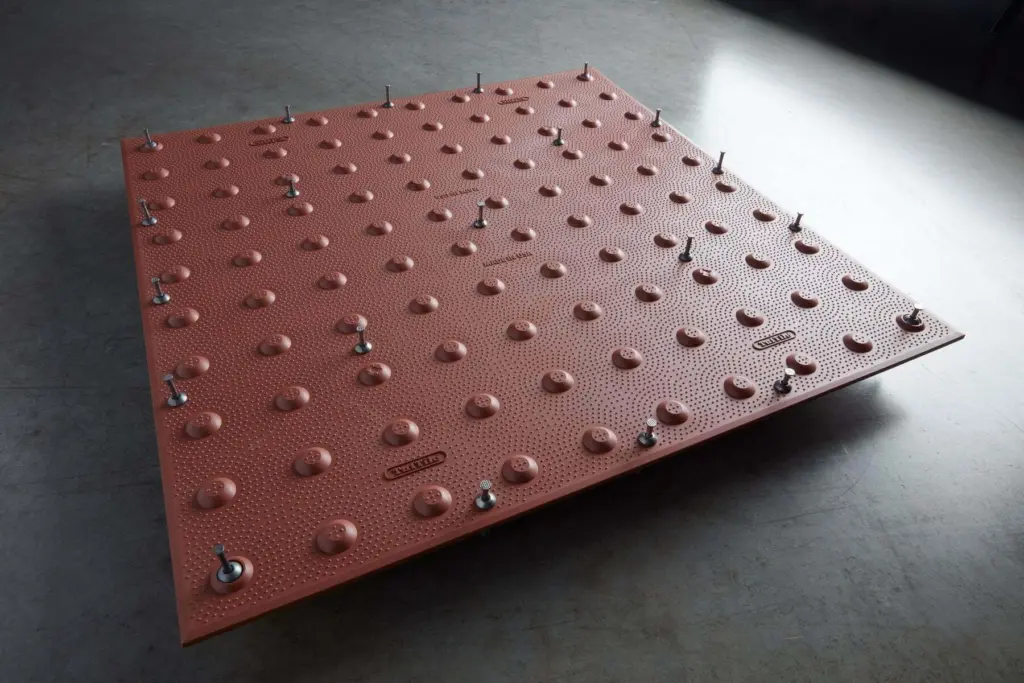


No Bloom, No Crack, No Fade Polymer ADA Tiles
No Bloom, No Crack, No Fade Polymer ADA Tiles
TufTile® detectable warning tiles are the ideal solution for cured concrete or retrofit ADA installations. Made in-house with advanced proprietary polymers for a long-wearing solution that will not bloom, crack, or chip. Superior resin delivers homogeneous UV-stable color. Corrosion-resistant stainless-steel drive pins (1 ½”) secure tiles tightly to the concrete. Engineered to endure high-volume foot traffic, the low-profile beveled edge provides a compliant transition from surrounding surfaces.
- 5-year performance warranty*
- Tile sizes : 2’x1’, 2’x2’, 2’x3’, 2’x4’, 2’x5’
- Radius options 9R-70R
- Replaceable and recyclable
- ADAAG/PROWAG/CA Title 24 Compliant
- Patent No. US D691,743 S
Available Colors
TufTile's ADA detectable warning tiles offer exceptional UV stability with homogenous color throughout the polymer.
- Will not chip, crack, or peel
- UV-stable colorant ensures color fastness
- Available in six colors
Documents

FAQs About Polymer Surface-Applied Detectable Warning Tiles
Polymer surface-applied detectable warning tiles are a practical option for retrofit and renovation projects where the existing walking surface will remain in place. Rather than being embedded into fresh concrete, surface-applied tiles are installed over a suitable existing substrate.
TufTile polymer provides a lightweight, UV-stable option with homogeneous color throughout the material, making it well suited for projects where a polymer detectable warning surface and surface-applied installation are desired.
Yes. TufTile polymer surface-applied detectable warning tiles are designed for installation over suitable existing cured concrete, making them an option for adding or replacing detectable warning surfaces without embedding the tile into newly poured concrete.
The substrate should be evaluated and prepared according to TufTile’s current installation requirements to support proper fastening and sealing.
TufTile polymer surface-applied tiles are positioned on the existing surface and secured using the specified mechanical fasteners and sealant. Because the system does not require the tile to be embedded in fresh concrete, it can simplify detectable warning installation on suitable existing surfaces.
Installers should follow TufTile’s current product-specific instructions for layout, drilling, substrate preparation, fastening, and sealing.
Yes. TufTile polymer detectable warning tiles weigh approximately 1.8 pounds per square foot, making polymer the lightest of TufTile’s detectable warning tile materials.
The lower weight can make tiles easier to ship, carry, position, and handle during retrofit installations compared with heavier metal alternatives.
The primary difference is the installation method. Polymer surface-applied tiles are fastened over a suitable existing surface, while polymer wet-set tiles are embedded into fresh concrete during placement.
Surface-applied polymer is generally suited to retrofit or renovation projects where the existing substrate will remain, while wet-set polymer is typically used with new concrete construction or concrete replacement. Both provide the lightweight construction, homogeneous color, and UV stability of TufTile polymer.

The EasyArc® Radius Calculator from TufTile quickly identifies the radius size closest to your project plans and creates a site-specific illustration with bill of materials.
Tiles and wedges are arranged side-by-side to form up to 20 radius configurations ranging from 9R to 70R. Don’t overcomplicate, just calculate with EasyArc.

- CHOOSE YOUR MATERIAL AND UNIT OF MEASUREMENT
- ENTER THE RADIUS [A] OR HEIGHT [B]
- ENTER THE CHORD [C] OR ARC [D] LENGTH