

Transit Platform Detectable Warning Tiles for Rail & Transportation Facilities
Transit platform detectable warning tiles provide a standardized tactile and visual cue that helps pedestrians who are blind or have low vision identify the boundary between a platform and adjacent rail or boarding area.
For engineers, transit agencies, architects, and contractors, selecting the right system involves more than accessibility compliance. Durability, installation method, environmental exposure, maintenance, and long-term performance are also important considerations.
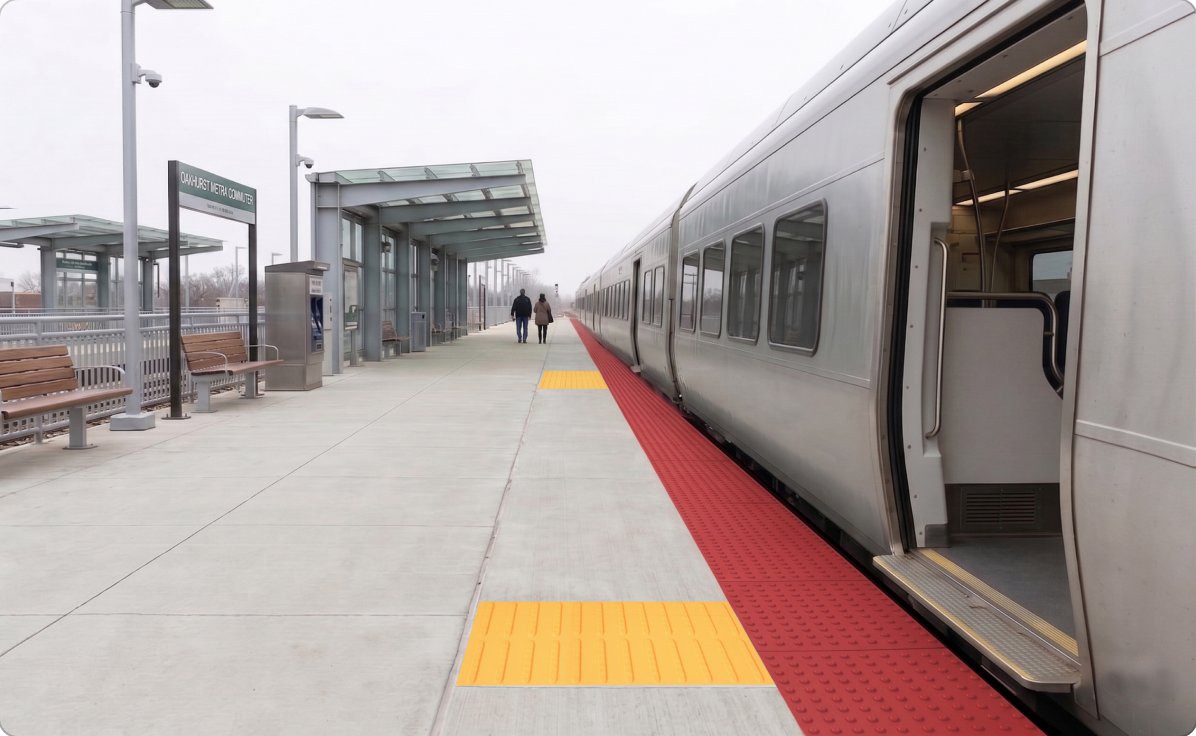
Why Detectable Warning Surfaces Are Used at Transit Platform Edges
Detectable warning surfaces feature a standardized pattern of raised truncated domes that can be detected underfoot or with a mobility cane. At transit platform edges, this pattern alerts pedestrians to the approaching boundary, while visual contrast provides an additional cue for passengers with low vision.
The 2025 Tactile Wayfinding in Transportation Settings for Travelers Who Are Blind or Visually Impaired guide identifies platform edges as an established application and emphasizes the warning message conveyed by the dome pattern.
Detectable Warning Tiles Across Rail & Transit Environments
Detectable warning surfaces may be used across a variety of rail and transit environments, depending on the facility and applicable requirements:
Commuter rail platforms
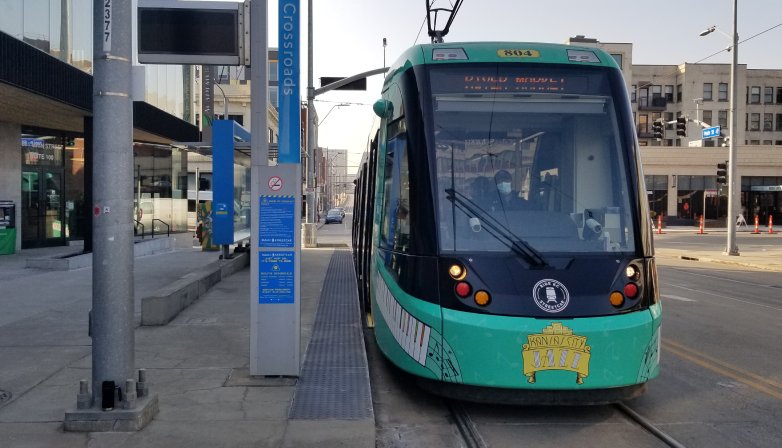
Light rail platforms
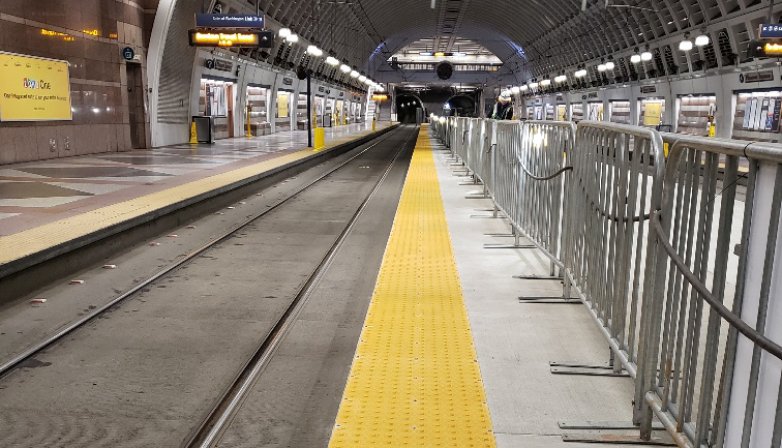
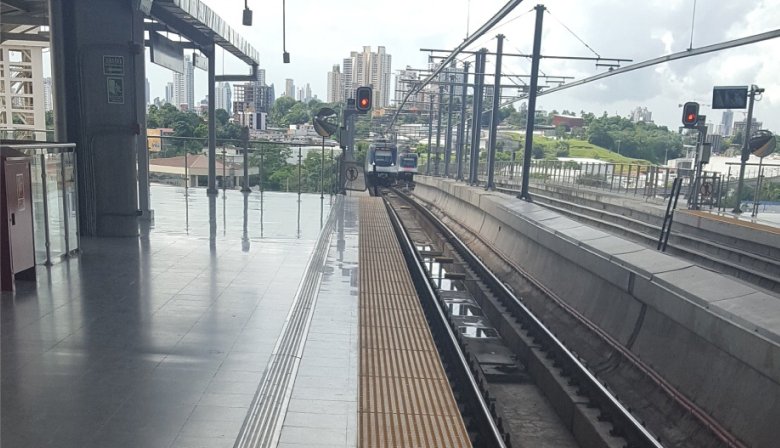
Subway and metro stations
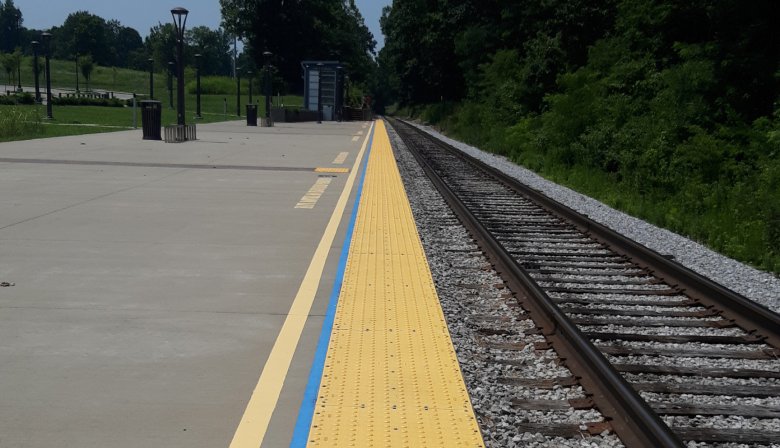
Street-level rail boarding and alighting areas
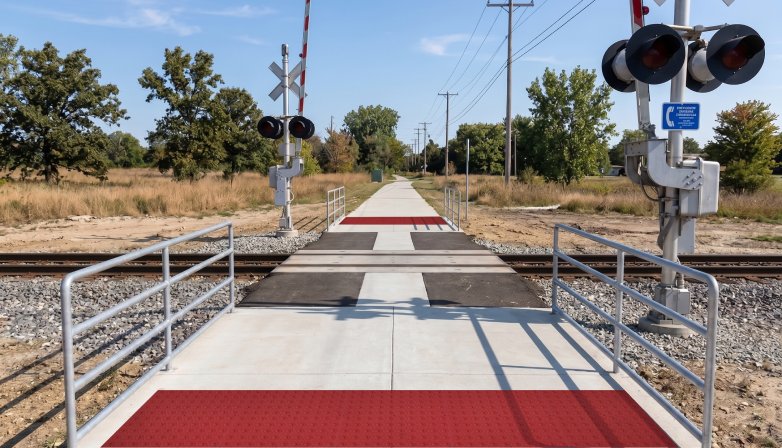
At-grade pedestrian rail crossings
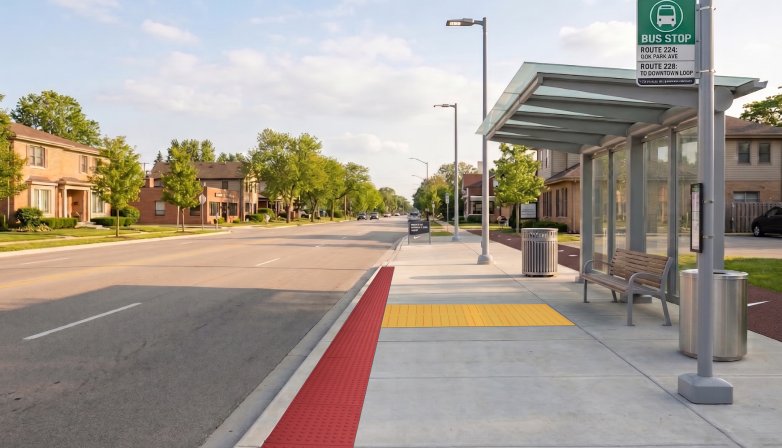
Bus and multimodal transportation facilities
The appropriate placement, dimensions, and configuration depend on the specific application and the accessibility standards, agency requirements, and project specifications governing the facility.
Accessibility Requirements for Transit Platform Detectable Warnings
Accessibility requirements for transit facilities vary by project and jurisdiction. Applicable standards may include the ADA Standards for Accessible Design, U.S. DOT Standards for Transportation Facilities, and Public Right-of-Way Accessibility Guidelines (PROWAG), along with state, local, transit-agency, and project-specific requirements.
Detectable warning surfaces must meet the technical specifications applicable to the project, including truncated dome geometry, spacing, visual contrast, surface dimensions, and placement. Requirements for platform-edge coverage and positioning should be verified for the particular facility.
ADA Detectable Warning Tile Requirements: A Guide to Specifications & Compliance
Transit Platforms Demand Long-Term Performance
Depending on the facility, transit platform detectable warning tiles may be exposed to:

Heavy pedestrian traffic and mobility devices

Rolling luggage, carts, and maintenance equipment

Frequent cleaning and maintenance

Moisture, precipitation, and freeze-thaw cycles

Snow removal and deicing materials

UV exposure and temperature extremes
These conditions make material durability, secure installation, and long-term maintenance important considerations for transit projects.
Choosing a Material for Transit Platform Detectable Warning Tiles
Material selection plays an important role in how detectable warning tiles perform under the traffic, environmental, and maintenance conditions of a transit facility. Galvanized steel, cast iron, and polymer each offer different characteristics to consider.
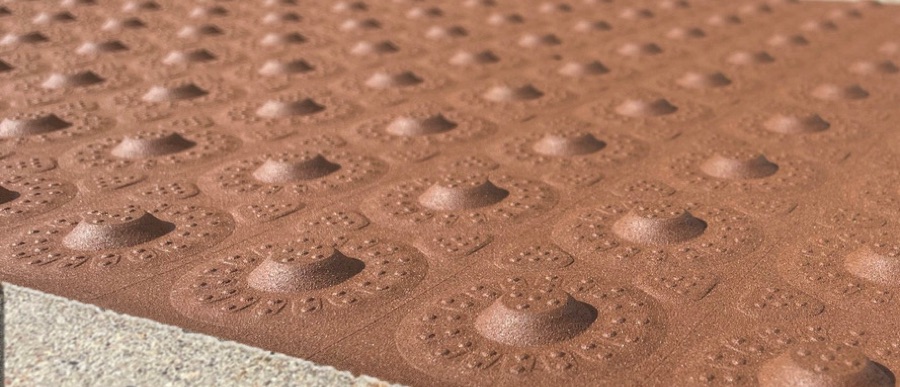
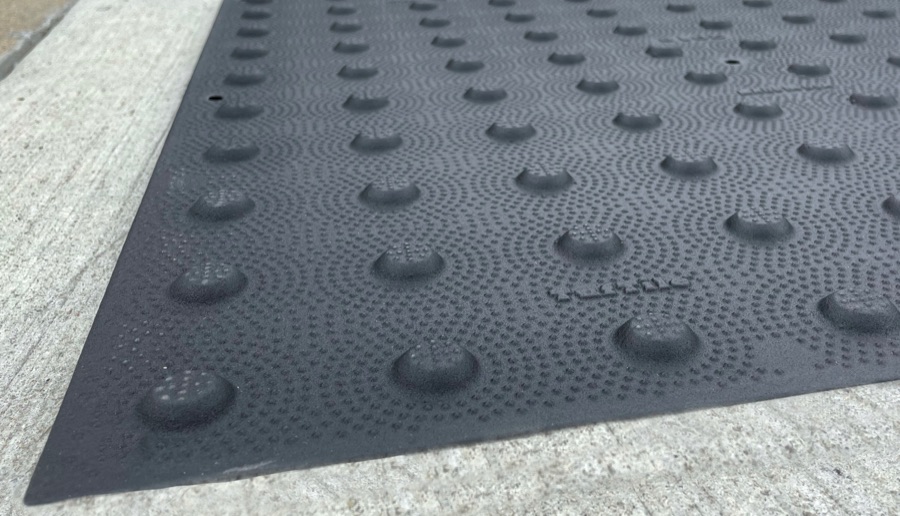
Galvanized Steel
Galvanized steel offers strength and corrosion protection for demanding transit environments. TufTile's G90 galvanized steel tiles are available in wet-set and surface-applied configurations for new construction and retrofit projects.
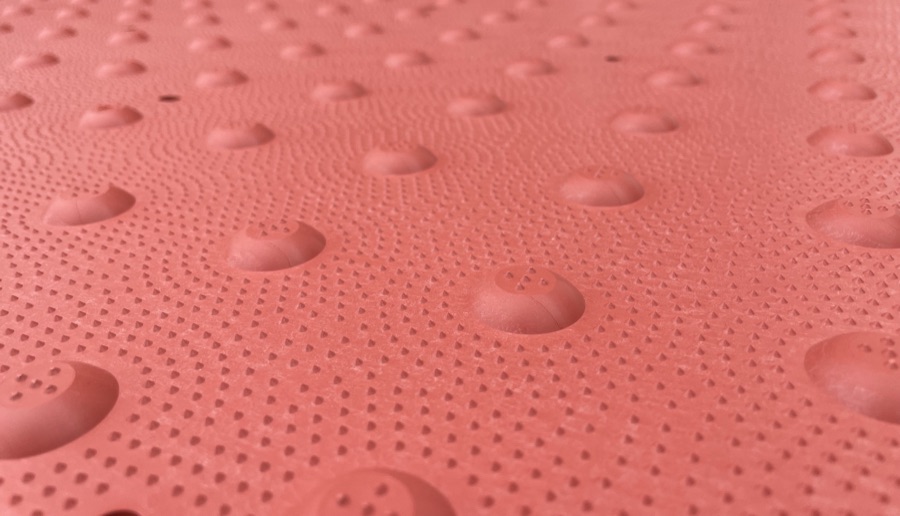
Cast Iron
Cast iron provides substantial strength and durability for demanding transportation applications, particularly new construction and reconstruction projects where wet-set installation is appropriate.
Polymer
Polymer offers a lightweight, non-metallic alternative available in multiple colors and configurations. Suitability for transit applications depends on product specifications, environmental exposure, and project requirements.
New Construction vs. Existing Transit Facilities
The condition of the platform or surrounding concrete can significantly influence which detectable warning tile system is appropriate.

Wet-Set Systems for New Construction
Wet-set tiles are installed during concrete placement, making them suitable for new transit platforms, reconstruction, and projects involving newly poured concrete.

Surface-Applied Systems for Existing Platforms
Surface-applied tiles are installed over existing concrete, providing a retrofit option for accessibility improvements and renovations without necessarily replacing the entire platform surface.

Replaceable Systems for Long-Term Maintenance
Replaceable systems allow individual tiles to be removed without replacing the surrounding concrete, potentially simplifying future maintenance and reducing disruption to transit operations.
Key Considerations When Specifying Detectable Warning Tiles for Transit Facilities
Transit projects often involve additional accessibility, operational, and agency-specific requirements. Key considerations include:

Accessibility & Agency Specifications
Confirm applicable federal, state, local, transit-agency, owner, and project requirements.
Platform Configuration
Evaluate platform dimensions, geometry, edge conditions, and boarding areas.
Pedestrian Traffic
Consider anticipated passenger volumes and wear.
Environmental Exposure
Account for moisture, temperature extremes, freeze-thaw cycles, deicing materials, and UV exposure.
Installation Method
Determine whether wet-set, surface-applied, or replaceable systems are appropriate.
Maintenance & Replacement
Plan for cleaning, inspection, repair, and future replacement.
Visual Contrast
Evaluate the warning surface against surrounding platform materials.
Designing for Maintenance from the Beginning
The 2025 TCRP tactile wayfinding guide emphasizes planning for maintenance during the design process. Regular inspections can help identify worn or damaged tactile surfaces, reduced visual contrast, debris accumulation, and surrounding pavement deterioration.
For long-term transit infrastructure, project teams should also consider how detectable warning tiles can be repaired or replaced while minimizing disruption to platform operations.
Detectable Warnings Are One Part of an Accessible Transit Environment
Detectable warning surfaces are one component of accessible transit wayfinding. Other tactile walking surface indicators may serve different purposes within a transportation facility.
Tactile directional indicators use raised bars to provide guidance, while tactile warning delineators help identify boundaries between pedestrian and vehicular paths in certain applications without grade separation.
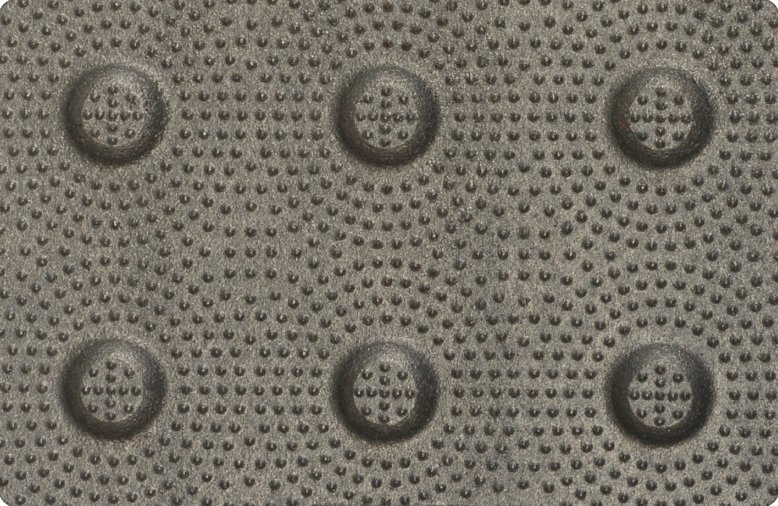
Detectable Warning Tiles
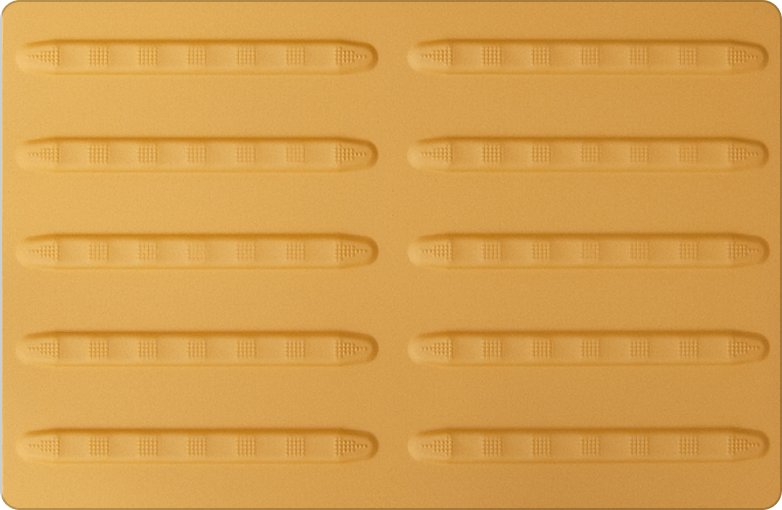
Tactile Directional Indicators
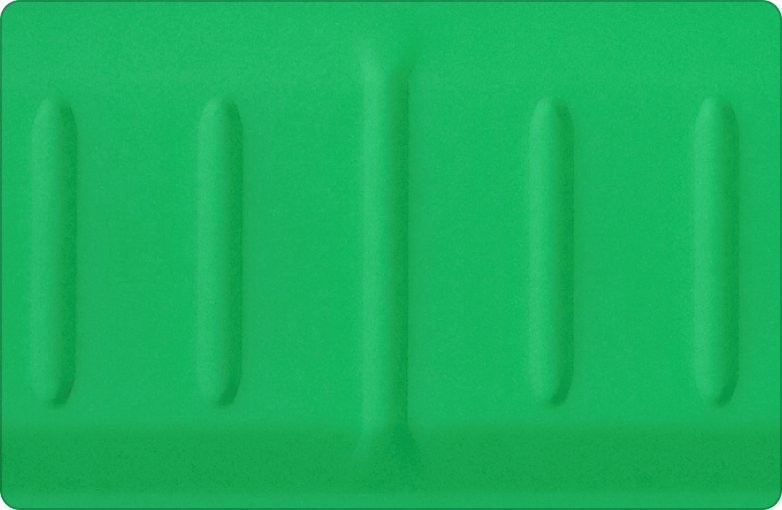
Tactile Warning Delineators
These patterns communicate different messages and should remain distinguishable from one another. The TCRP tactile wayfinding guide emphasizes consistency and the ability to differentiate between tactile surface types.
Learn More About TufTile Detectable Warning Tile Solutions
See how TufTile’s Complete Tactile Surface System works across different pedestrian environments with our Interactive Streetscape tool.

Need Detectable Warning Tiles for a Rail or Transit Project?
TufTile can help you compare materials, installation methods, product configurations, and technical documentation for your transportation project.
Frequently Asked Questions
Transit platform detectable warning tiles are tactile surfaces featuring raised truncated domes that provide a recognizable warning at platform edges and other applicable transitions. The surface can be detected underfoot or with a mobility cane and is intended to help people who are blind or have low vision identify an approaching hazard.
Detectable warning surfaces are an established accessibility feature at transit platform edges, but the requirements governing a particular project depend on the type of facility and applicable federal, state, local, agency, and project-specific standards. Project teams should verify the requirements for each installation.
There is no single material that is best for every transit facility. Galvanized steel, cast iron, and polymer each offer different characteristics. Project specifications, environmental exposure, installation conditions, anticipated traffic, maintenance requirements, and owner preferences should all be considered.
Depending on the platform conditions and project requirements, surface-applied detectable warning tiles may provide an option for existing concrete surfaces. New construction or platform reconstruction may instead use wet-set systems installed during concrete placement.
Maintenance requirements depend on the material, installation, facility conditions, and manufacturer recommendations. Regular inspections can help identify damaged surfaces, wear, debris accumulation, reduced visual contrast, or surrounding pavement conditions that could affect the warning surface's effectiveness.
Disclaimer: ADA and accessibility requirements may vary by jurisdiction, agency, and project and are subject to change. This content is provided for general educational purposes only. Always confirm current federal, state, local, agency, and project-specific requirements before specifying or installing detectable warning products.