

Where Are Detectable Warning Tiles Required? Understanding ADA Requirements
Detectable warning tiles play an important role in accessible pedestrian environments, but they are not intended for every sidewalk, walkway, or crossing. Instead, the ADA Standards for Accessible Design identify specific situations where detectable warning surfaces are commonly required to help alert pedestrians who are blind or have low vision to changes in the walking environment.
Because ADA requirements vary depending on the application and project conditions, it's important to understand where detectable warning surfaces are typically specified and to verify the applicable standards before selecting or installing a product.
When Are Detectable Warning Tiles Commonly Required?
Detectable warning surfaces are generally used where pedestrians transition from an accessible walking route to an area where additional awareness is needed, such as a street, transit platform, or rail crossing. Their purpose is to provide a consistent tactile warning before pedestrians encounter a potential hazard.
The specific placement of detectable warning tiles depends on the application and the requirements established by the ADA Standards for Accessible Design, along with any additional state, local, or agency requirements that may apply to a project.

Curb Ramps & Street Crossings
Curb ramps are among the most common locations where detectable warning surfaces are specified. These transitions connect sidewalks with streets and help provide a tactile cue that pedestrians are leaving the sidewalk environment and entering a roadway. Depending on the design of the pedestrian crossing, other street crossing configurations may also incorporate detectable warning surfaces in accordance with applicable accessibility standards.

Blended Transitions
Unlike a traditional curb ramp, a blended transition gradually slopes from the pedestrian route to the street without a distinct ramp. Because the change in elevation is less apparent, detectable warning surfaces may be used to help identify the transition between the pedestrian route and the roadway. Whether detectable warning surfaces are appropriate depends on the specific application and the applicable accessibility requirements.

Transit Platform Edges
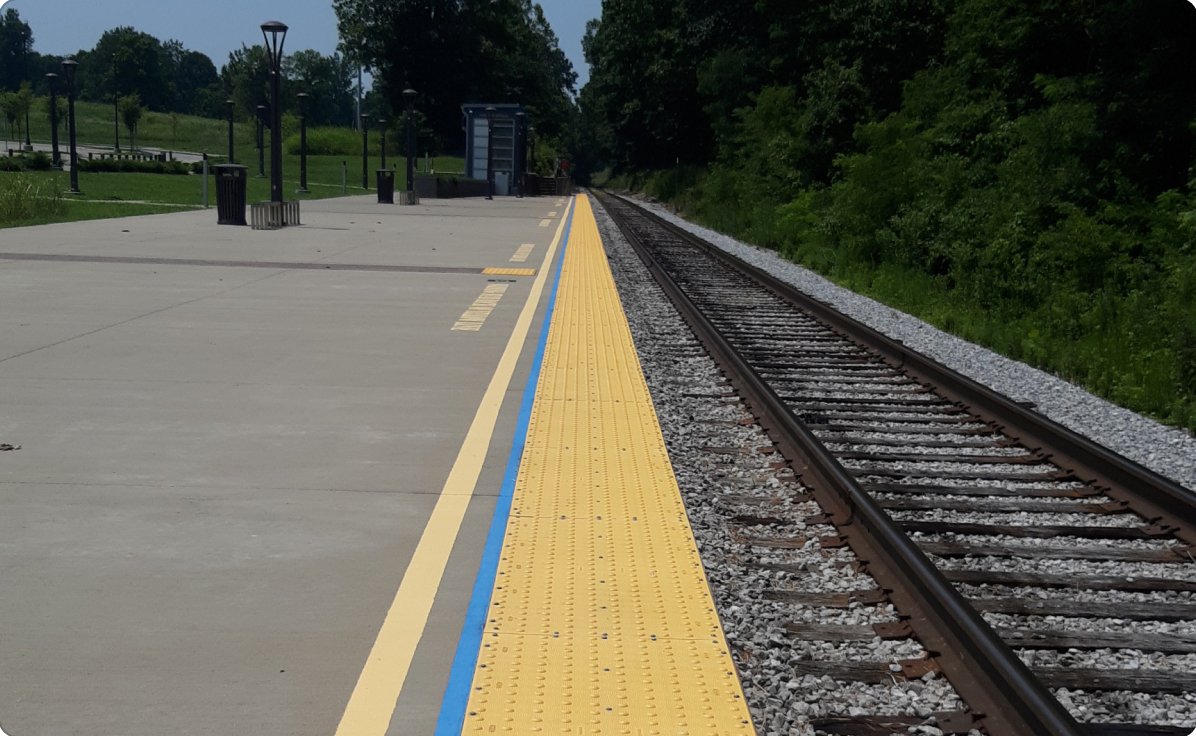
Detectable warning surfaces are commonly installed along the edges of transit platforms to help alert passengers approaching the boarding area. Their standardized tactile pattern provides an important warning before pedestrians reach the platform edge adjacent to train or rail operations. Transit agencies may also have their own design standards and specifications in addition to ADA accessibility requirements.

Pedestrian Refuge Islands & Medians
Pedestrian refuge islands and raised medians are designed to provide a protected waiting area for pedestrians crossing multiple lanes of traffic. Depending on the crossing configuration and applicable standards, detectable warning surfaces may be incorporated to help identify transitions between pedestrian routes and adjacent roadways. Project-specific requirements should always be confirmed during the design and specification process.

Pedestrian Rail Crossings
In some pedestrian rail crossing applications, detectable warning surfaces may be used to help identify the transition into areas where pedestrians cross railroad or light rail tracks. Placement requirements vary depending on the crossing type and the governing accessibility standards. Because rail projects often involve additional agency requirements, designers should verify the applicable standards for each installation.
Factors That Influence Detectable Warning Tile Placement
Although the ADA Standards for Accessible Design provide the foundation for accessible design, the placement of detectable warning surfaces may also be influenced by several project-specific factors, including:
-
 Type of pedestrian environment
-
Nature of the pedestrian transition
-
Applicable ADA accessibility standards
-
State or local accessibility requirements
-
Transit agency or owner specifications
-
Project design and construction conditions
Reviewing these factors early in the design process helps ensure detectable warning surfaces are specified appropriately for the intended application.
Why Proper Placement Matters
Properly placed detectable warning surfaces help create a more consistent and predictable experience for pedestrians who rely on tactile cues to navigate public spaces. Installing detectable warning tiles where they are appropriate—and in accordance with applicable accessibility standards—supports both user safety and long-term ADA compliance.
For project teams, understanding where detectable warning surfaces are commonly used can also simplify planning, specification, and product selection throughout the design and construction process.
Need Help Selecting Detectable Warning Tiles for Your Project?
Every project has unique accessibility requirements, installation conditions, and specification needs. TufTile offers ADA-compliant detectable warning tile systems in multiple materials and installation methods to help support a wide range of pedestrian infrastructure projects.
Learn More About TufTile Detectable Warning Tile Solutions
See how TufTile’s Complete Tactile Surface System works across different pedestrian environments with our Interactive Streetscape tool.

Need Help Selecting the Right Detectable Warning Tile?
Whether you're designing a new project or upgrading existing infrastructure, our team can help you compare materials, installation methods, and product options.
Frequently Asked Questions
Detectable warning surfaces are commonly specified at locations where pedestrians transition from an accessible walking route to an area requiring additional awareness, such as curb ramps, transit platforms, pedestrian refuge islands, and certain rail crossings. Requirements vary depending on the application and applicable accessibility standards.
Not necessarily. Detectable warning surface requirements depend on the specific crossing configuration and the applicable accessibility standards for the project.
A blended transition is a pedestrian route that gradually slopes from the sidewalk to the street without a distinct curb ramp. Depending on the application, detectable warning surfaces may be incorporated to help identify the transition.
Transit platform edges are among the most common applications for detectable warning surfaces. Project-specific requirements should be confirmed using the applicable accessibility standards and transit agency specifications.
The ADA Standards for Accessible Design establish accessibility requirements, while some projects may also be subject to state, local, or agency-specific standards that influence detectable warning surface placement.
Disclaimer: ADA and accessibility requirements may vary by jurisdiction, agency, and project and are subject to change. This content is provided for general educational purposes only. Always confirm current federal, state, local, agency, and project-specific requirements before specifying or installing detectable warning products.