

Cast-In-Place vs. Surface-Applied Detectable Warning Tiles: Key Differences
When selecting detectable warning tiles for a project, one of the first decisions is whether a cast-in-place or surface-applied system is the better fit. Both options provide ADA-compliant tactile warning surfaces and serve the same fundamental purpose, but they are designed for very different construction scenarios.
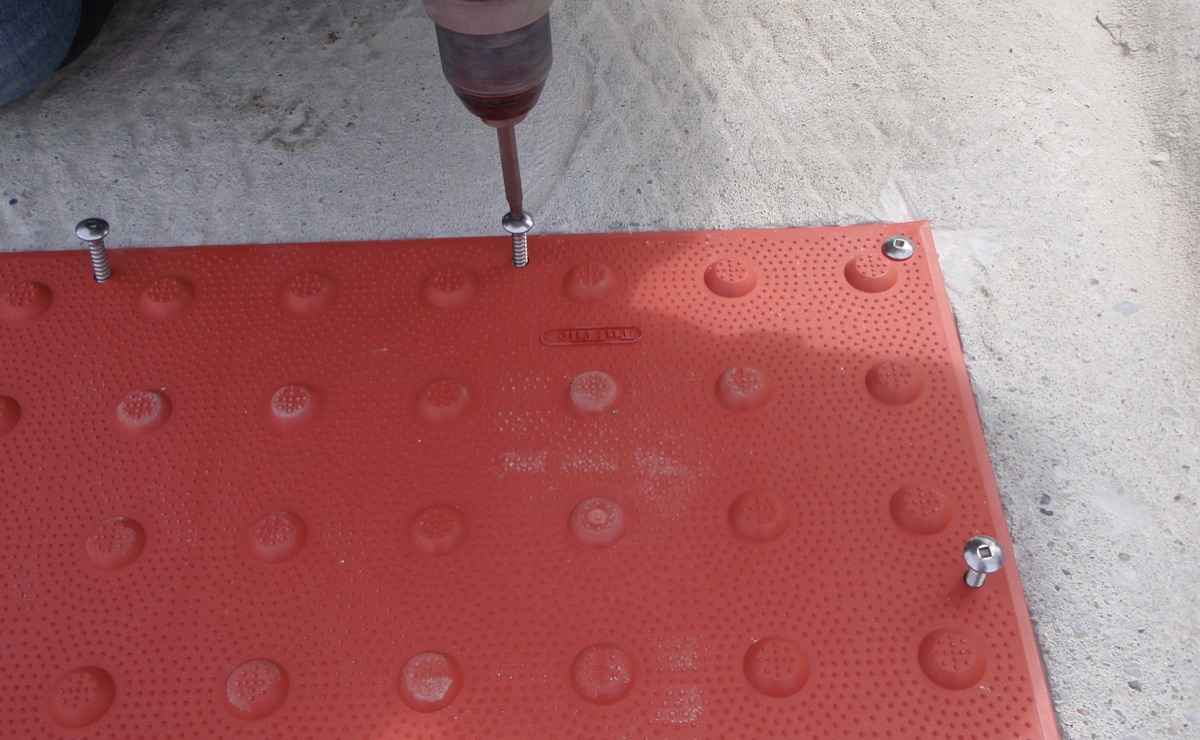
Cast-in-place detectable warning tiles — also referred to as an embedded detectable warning system — are installed during concrete placement and become integrated into the finished concrete surface. Surface-applied detectable warning tiles are installed on top of existing concrete after it has cured. As a result, the choice often comes down to one key factor: whether the project involves new concrete construction or existing infrastructure.
This guide compares cast-in-place and surface-applied detectable warning tiles, helping engineers, contractors, municipalities, and specifiers determine which installation method is best suited for their project.
Quick Reference Comparison
Choosing between cast-in-place and surface-applied detectable warning tiles often comes down to project scope, concrete conditions, and construction timing.
Cast-In-Place vs Surface-Applied: Understanding the Differences
Both systems can provide long-term performance when properly selected and installed. The difference is not necessarily which system is better, but which system aligns with the project's construction conditions.
For projects involving new sidewalks, curb ramps, or complete reconstruction, cast-in-place systems are often the preferred solution. For accessibility upgrades involving existing infrastructure, surface-applied systems can help reduce demolition, lower project costs, and accelerate implementation.
New Concrete = Cast-In-Place Detectable Warning Tiles
Existing Concrete = Surface-Applied Detectable Warning Tiles
Common Applications

While the installation method often follows the construction approach, some applications can be served by either system.
Detectable Warning Tile Material Comparison
TufTile manufactures cast-in-place detectable warning tiles in galvanized steel, cast iron, and polymer. Surface-applied systems are available in galvanized steel and polymer.
Cast-in-Place or Surface-Applied System Decision Guide
While every project has unique requirements, answering these questions can quickly narrow the appropriate installation method.
Are you pouring new concrete?
Cast-In-Place
Is the existing concrete remaining in place and structurally sound?
Surface-Applied
Cast-In-Place as part of reconstruction
Will curb ramps or sidewalks be reconstructed?
Cast-In-Place
Surface-Applied
Is the project primarily part of an ADA transition plan or accessibility upgrade?
Surface-Applied
Consider whether the project includes new concrete construction or reconstruction.
Would replacing existing concrete significantly increase project costs?
Surface-Applied
Consider whether reconstruction is already planned or necessary.
Making the Right Choice for Your Project
Both cast-in-place and surface-applied detectable warning tiles provide ADA-compliant tactile warning surfaces, but they are designed for different project conditions.
By evaluating project scope, existing site conditions, construction schedules, and long-term performance requirements, engineers, contractors, and municipalities can identify the installation method that best aligns with their project goals. When in doubt, the TufTile team can help evaluate your application and recommend the most appropriate solution.
Learn More About TufTile Detectable Warning Tile Solutions
See how TufTile’s Complete Tactile Surface System works across different pedestrian environments with our Interactive Streetscape tool.

Need Help Choosing Between Cast-In-Place and Surface-Applied Systems?
Whether you're planning a new construction project, upgrading existing infrastructure, or evaluating material options, our team can help identify the right solution for your application.
Frequently Asked Questions
The primary difference is how they are installed. Cast-in-place detectable warning tiles are installed during concrete placement and become integrated into the finished concrete surface. Surface-applied detectable warning tiles are installed on top of existing concrete after it has cured, making them ideal for retrofit and accessibility upgrade projects.
For most projects, the decision comes down to the condition of the concrete. If new concrete is being installed or existing infrastructure is being reconstructed, cast-in-place systems are often the preferred choice. If the existing concrete remains in place and only accessibility improvements are needed, surface-applied systems are typically the more practical solution.
In most cases, surface-applied detectable warning tiles are the preferred solution for existing concrete. They allow ADA-compliant warning surfaces to be added without removing and replacing otherwise serviceable concrete, helping reduce project costs and minimize disruption.
Cast-in-place systems are typically used for new construction and reconstruction projects where concrete placement is already part of the project scope. They are commonly specified for new curb ramps, sidewalks, pedestrian crossings, transit facilities, and infrastructure improvements.
Yes. When manufactured and installed in accordance with applicable standards and project specifications, surface-applied detectable warning tiles can satisfy ADA detectable warning requirements. They are widely used by municipalities, transportation agencies, and facility owners for accessibility upgrades.
TufTile manufactures cast-in-place detectable warning tiles in galvanized steel, cast iron, and polymer. Surface-applied detectable warning tiles are available in galvanized steel and polymer. Material selection often depends on project requirements, environmental conditions, maintenance expectations, and owner preferences.